
🐶 10% Off Your First Order Code “WELCOME10”

natural probiotics for dogs

Natural Ingredients That Boost Gut Health in Dogs

One in three dogs shows subtle stool changes after a course of antibiotics, yet many owners miss the signs. That gap can mean missed chances to support your pet’s gut and overall health.

You’ll learn how the canine microbiome works and why the right gut-support choices matter. Short, evidence-informed tips will help you pair fermented food and a made-for-dogs supplement safely.

Dog-specific strains with transparent CFU counts that complement fermented food sources like kefir or yogurt. Kefir, when used properly, can raise beneficial lactic acid bacteria with minimal side effects; start very small and avoid mixing with tetracycline antibiotics.

This section sets the stage: expect simple strain names, serving guidance, and signs that suggest your pet may benefit now. You’ll get practical steps to test changes in stool quality, energy, and coat health without adding excess calories.

Key Takeaways

  • Antibiotics often disrupt the gut; watch stool and energy.
  • Use kefir and fermented food cautiously and in small amounts.
  • Supplements usually deliver higher, documented CFUs than food.
  • Start low, track stool quality, and consult your vet when unsure.

Why your dog’s gut health matters right now

Your dog’s gut affects far more than digestion—it’s tied to immunity, mood, and recovery. The community of microbes inside the intestines is often called the forgotten organ because it works quietly, every day.
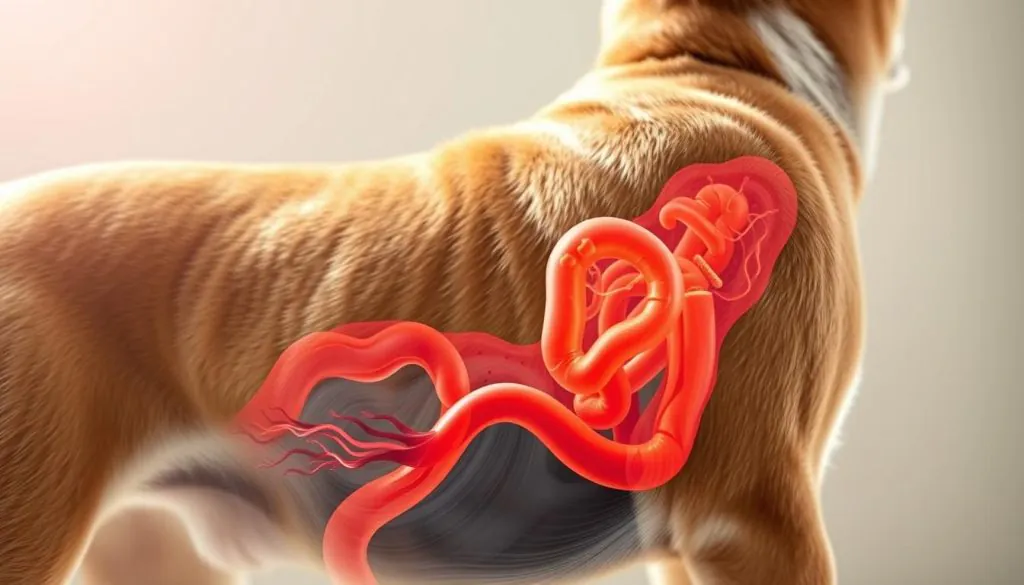
A close-up view of a dog's digestive system, showcasing a vibrant, healthy gut. The scene is lit by soft, natural lighting, creating a serene and inviting atmosphere. The foreground features a detailed cross-section of the intestines, highlighting the intricate web of blood vessels, beneficial bacteria, and other essential components that contribute to optimal gut health. The middle ground displays a three-dimensional model of the dog's gastrointestinal tract, providing a comprehensive overview of the system's structure and function. The background subtly fades into a calming, neutral tone, allowing the focus to remain on the gut's inner workings. The overall composition conveys the importance of maintaining a balanced and thriving gut microbiome for a dog's overall well-being.

The microbiome: your dog’s “forgotten organ”

The microbiome controls vitamin K and B production, makes short-chain fatty acids like acetate and butyrate, and helps keep the mucosal barrier strong. These SCFAs lower gut pH, feed friendly bacteria, and protect against a leaky gut.

Digestive system basics: stool quality, immunity, and mood

About 80% of the immune system lives in the gut. Balanced microbes crowd out harmful strains and lower chronic inflammation risk. You’ll often notice firmer, more regular stools when the system is in balance.

  • Vitamins & mood: B and K vitamins plus serotonin precursors come from microbes.
  • Barrier & recovery: SCFAs protect the mucus layer and aid nutrient uptake.
  • Stress response: antibiotics, stress, and diet shifts can destabilize this community.
Benefit What to watch Action
Better digestion Firmer stools, regularity Adjust diet, consider targeted supplements
Stronger immunity Fewer flare-ups, faster recovery Add prebiotic fibers and safe strains
Improved mood Steadier energy, less anxiety Support microbial diversity in meals

With clear strain labels and CFU counts, it’s an easy next step when you need targeted support.

Timed use of specific strains gives fast relief when your pet faces stress or antibiotics.

Top benefits you can expect

Dog gut health often improves quickly when you add targeted support. Expect firmer stools, less gas, and fewer tummy rumbles as microbes help your pet digest food more efficiently.
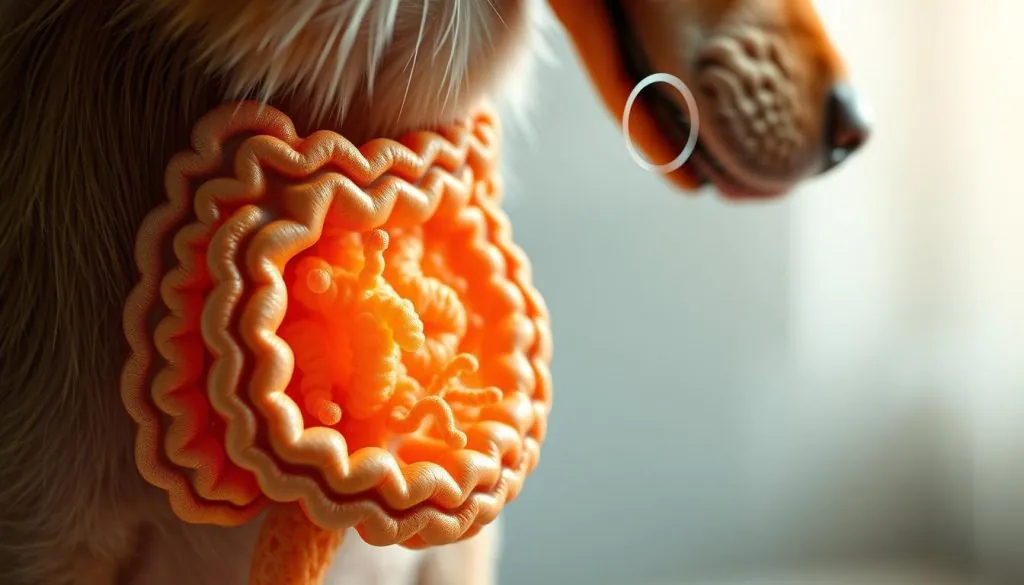
a high-resolution, photorealistic image of a healthy dog's digestive system, showcasing the natural probiotic-rich elements that contribute to optimal gut health. The image should feature a detailed cross-section of a dog's intestines, with a focus on the diverse array of beneficial bacteria lining the intestinal walls. The foreground should depict the intricate folds and villi of the intestines, while the middle ground highlights the proliferation of probiotic cultures. The background should subtly convey a sense of tranquility and balance, perhaps through soft, natural lighting and a muted color palette. The overall composition should be visually striking, conveying the importance of probiotics in maintaining a healthy canine gut microbiome.

Other common benefits include healthier skin and a softer coat as gut balance lowers inflammatory signals to the body.

  • Digestion: shorter diarrhea duration and steadier stools.
  • Immune support: beneficial strains crowd out pathogens and support immune cells.
  • Skin & coat: fewer allergy-driven flares and improved coat texture.

When they’re most helpful

Use supplements after antibiotics, during travel, boarding, fireworks, or quick diet changes. These are peak times the microbiome needs help.

Lactic acid strains work well short-term, while S. boulardii and soil-based Bacillus resist antibiotics and aid recovery.

Start small with sensitive animals and monitor stool, appetite, and energy for 7–10 days. With simple timing and steady use, you’ll often see improvements in days and clearer gains over time.

Probiotics vs prebiotics: how they work together for dog gut health

Pairing live microbes with the right fibers turns short-term fixes into lasting gut resilience.
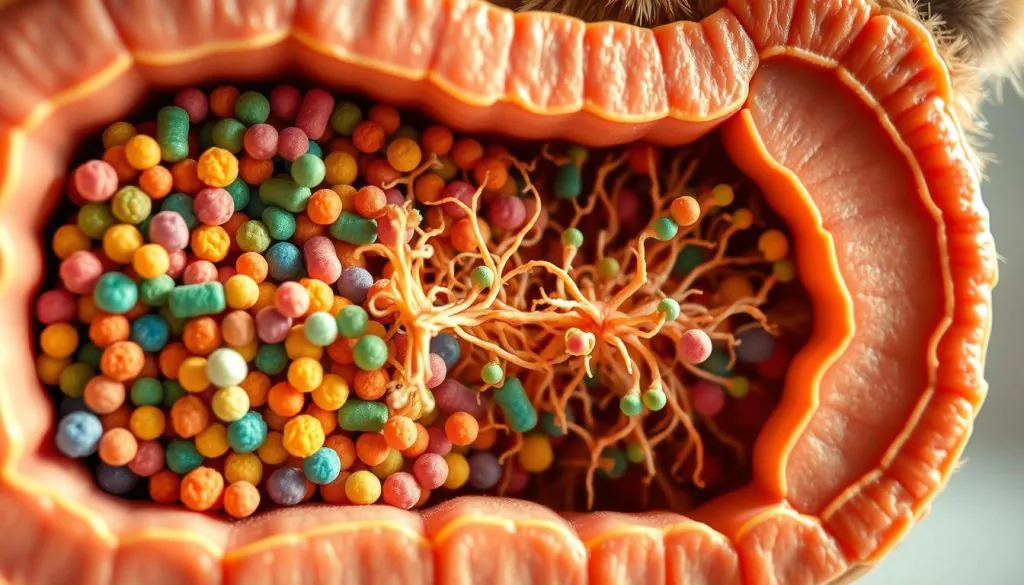
A detailed cross-section of a dog's gut, showcasing the intricate relationship between prebiotics and probiotics. In the foreground, colorful probiotic bacteria thrive, their shapes and sizes varied. In the middle ground, intricate networks of prebiotic fibers provide nourishment, connecting the bacteria to the gut lining. The background depicts the gut's anatomy, with villi and crypts visible, all bathed in a warm, natural lighting that highlights the dynamic ecosystem. The scene conveys the harmonious balance necessary for optimal canine gut health, inviting the viewer to explore the delicate symbiosis at play.

Good bacteria vs their food source

Probiotics deliver live, beneficial microbes that can help digestion and immune signals.

Prebiotics are fermentable fibers like inulin from chicory that feed those microbes so they stay active.

Short-chain fatty acids and why they protect the gut lining

When prebiotics ferment, they create short-chain fatty acids—acetate, propionate, and butyrate. These acids help form mucus, keep tight junctions strong, and lower gut pH to slow harmful bacteria.

  • Think of probiotics as the good bacteria and prebiotics as the fuel that keeps them thriving in your pet’s gut.
  • SCFAs nourish the lining, discourage bad microbes, and support regularity and comfort for dogs.
  • Without enough prebiotics, live strains can pass through before delivering full benefits.
  • Pair a targeted supplement like DLY Pets probiotics with prebiotic-rich food to boost results.

Probiotic-rich foods you can give your dog

Small servings of fermented foods often deliver measurable gut benefits fast. Use these items as toppers or treats so you control calories and ingredients. Pair them with a measured supplement for steady CFUs.
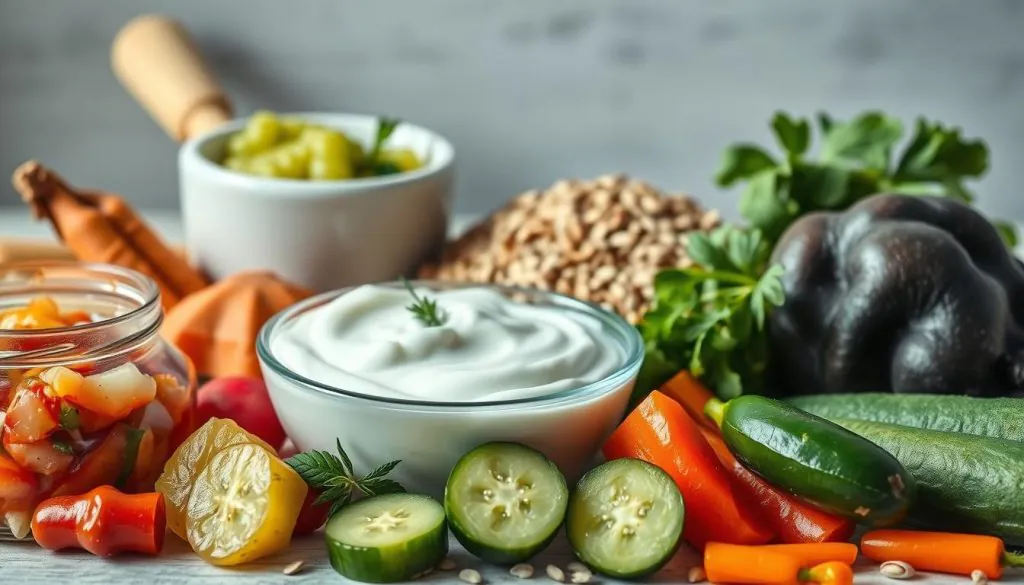
A vibrant still life of an assortment of probiotic-rich foods for dogs, captured in soft, natural lighting. In the foreground, a selection of fermented vegetables such as sauerkraut, kimchi, and pickled cucumbers, their textures and colors accentuated. The middle ground features a bowl of plain, unsweetened yogurt, garnished with fresh herbs. In the background, a mix of whole grains like quinoa, millet, and oats, symbolizing the fiber-rich component of a gut-healthy diet. The composition is balanced, with a sense of harmony and nutritional abundance, inviting the viewer to explore the benefits of these probiotic powerhouses for canine gut health.

Kefir — study-backed lactic acid bacteria

Start with 1/4 teaspoon and work up slowly to roughly 1 teaspoon per 16 lb daily. Kefir raised lactic acid bacteria in trials, but avoid it with tetracycline antibiotics or if your pet is dairy-sensitive.

Plain Greek yogurt — what to choose

Pick plain, unsweetened Greek yogurt that lists live cultures like Streptococcus thermophilus and Lactobacillus bulgaricus. Skip flavored or sugary varieties, and don’t give yogurt with tetracyclines.

Fermented vegetables, fruits, and niche options

Finely chopped carrots, broccoli, or sauerkraut add Bifidobacteria and Lactobacillus; start at about 1/2 teaspoon. Blueberry or banana ferments can help but watch sugar—begin with one blueberry twice daily.

Pickles are high in sodium and often flavored with garlic or onion; use tiny amounts only. Green tripe contains beneficial bacteria like L. acidophilus but buy from reputable sources and handle raw safely.

  • Tip: Make these foods toppers, not meal replacements.
  • To ensure consistent, measured CFUs while you use foods as extras.

Evidence-based probiotic strains for dogs

Not all strains work the same; some target stool quality while others support skin and immunity. Below are evidence-backed options you can look for on labels.
A high-resolution photograph of an assortment of evidence-based probiotic strains for dogs, including Lactobacillus, Bifidobacterium, and Enterococcus species, neatly arranged against a clean, minimalist background. The probiotic capsules and powders are displayed in an organized manner, with a focus on showcasing their purity, potency, and scientific validation. The lighting is soft and diffused, accentuating the natural colors and textures of the supplements. The composition is well-balanced, with a clear focal point and a sense of depth, inviting the viewer to examine the details of the probiotics closely.

Lactobacillus and Bifidobacterium

Lactic acid bacteria such as L. acidophilus, L. rhamnosus, L. plantarum, and Bifidobacterium longum support digestion, stool quality, and immune tone. They help with diarrhea and may ease stress-related gut changes.

Enterococcus and Pediococcus

Enterococcus faecium often survives stomach acid and can inhibit harmful microbes along the digestive tract. Pediococcus acidilactici shows promise for skin issues and leaky gut.

Saccharomyces boulardii

This yeast probiotic resists many antibiotics and helps acute or chronic diarrhea. It’s a solid choice when you need protection during medication.

Soil-based Bacillus strains

Bacillus subtilis, B. coagulans, and B. indicus are hardy, anti-inflammatory, and often effective at lower CFUs. B. indicus can add antioxidant carotenoids and B vitamins.

  • Aim for multi-strain formulas to better crowd out growth harmful bacteria.
  • Choose brands that list strains and CFUs per serving so you know exactly what your dog receives.

Serving sizes and how much to give per day

Small, steady portions help you build gut support while avoiding extra calories. Start slowly and watch how your pet responds across the first 7–10 days.

A glass bowl filled with creamy, tantalizing kefir yogurt sits atop a wooden table, illuminated by warm, natural lighting. Beside it, a measuring cup and a playful, curious dog gazes intently, eager to understand the proper serving size. The background is a serene, minimalist setting, allowing the focus to remain on the key elements - the yogurt, the measuring cup, and the attentive canine companion, capturing the essence of the section on "Serving sizes and how much to give per day" for a healthy, gut-nourishing diet.

Kefir guidance

Begin at 1/4 teaspoon and increase only if your dog tolerates it. A practical target is about 1 teaspoon per 16 pounds of body weight each day once tolerated.

Avoid kefir while your pet takes doxycycline or other tetracycline antibiotics.

Yogurt and fermented veggies

Use plain Greek yogurt. Aim for about 1 teaspoon daily for small dogs and up to 1 tablespoon for large dogs.

Offer fermented veggies or fruits conservatively: 1–2 tablespoons for small dogs, up to 1/4 cup for large dogs. Monitor weight and adjust treats so calories stay under 10% of daily intake.

  • Start tiny for a few days, then raise the amount gradually.
  • Space servings through the day to reduce stomach upset.
  • Watch stool, appetite, and energy for 1–2 weeks as you adjust.
  • To simplify daily dosing without extra calories, consider a dog-specific DLY Pets supplement with clear serving directions.

Smart timing: the best time of day to give probiotics

Pick a steady moment in your day to give supplements so your dog builds a reliable routine.

A cozy kitchen counter scene, sunlit and inviting, with a glass of water, a dog bowl, and a bottle of probiotics in the foreground. In the middle ground, a smiling pet owner carefully measures out the probiotic supplement, while in the background, a window overlooks a lush, green garden. The lighting is soft and natural, conveying a sense of wellness and care. The composition is balanced, drawing the viewer's attention to the central action of administering the probiotics at the optimal time of day.

Consistency beats precision. Most dogs do best when you give a dose at the same mealtime each day. That helps steady levels in the gut and makes dosing simple to remember.

Many lactic acid strains do better with food. Meals buffer stomach acid and help more live cells survive to reach the system.

“Hardy strains such as S. boulardii and soil-based Bacillus often tolerate being given with or without food, including during antibiotics.”

  • Same time daily: builds habit and steady effects for your dog.
  • With meals: lactic acid strains benefit from food to survive stomach acid.
  • Without food: S. boulardii and Bacillus strains are hardy and flexible.
  • Medication note: keep dairy ferments away from tetracyclines and follow vet timing.
  • Hot food: avoid mixing into very hot meals—heat can kill live cultures.
  • Split doses: for sensitive stomachs, use morning and evening to improve tolerance.
  • Stress windows: start a few days before travel or boarding and continue after.
  • Post-antibiotics: continue daily use for several weeks to support recovery.
Timing Option Best with When to use
Mealtime (single dose) Regular kibble or wet food Daily habit for most dogs; boosts lactic acid survival
Split doses (AM/PM) Smaller meals Sensitive stomachs or large dogs needing gradual exposure
Anytime (hardy strains) With or without food During antibiotics or when routine is unpredictable

Track results: watch stool and behavior and adjust timing that suits your dog’s routine and system.

Safety first: allergies, added ingredients, and sensitive stomachs

Start every new gut-support food slowly so you can spot reactions quickly. Introduce new items across 7–10 days and watch stool, appetite, and skin. Short, steady steps cut the risk of GI upset and make it easier to trace any triggers.
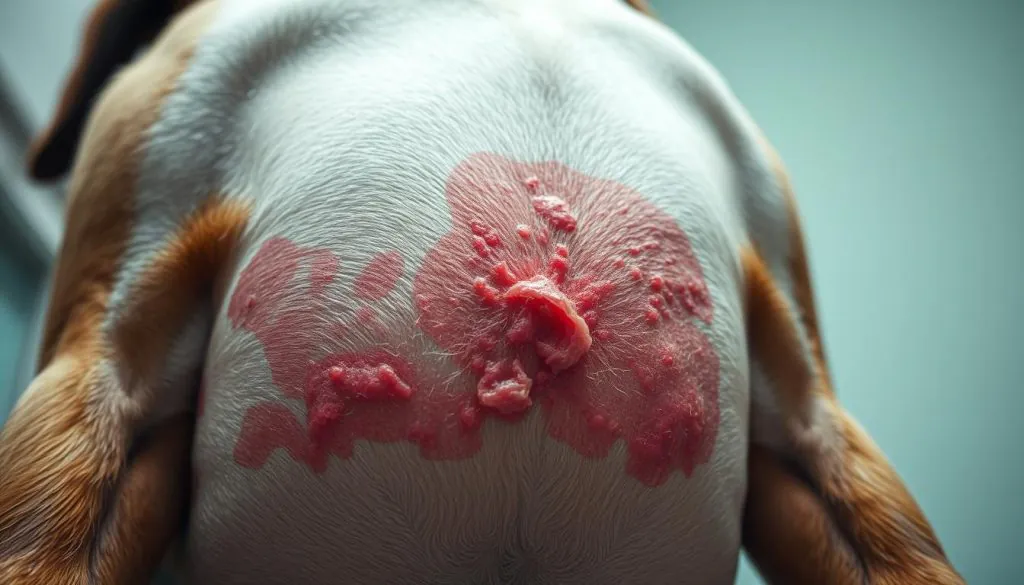
A close-up view of a dog's stomach, prominently displaying an inflamed, reddish skin rash. The fur is patchy and the skin appears irritated, with visible bumps or sores. The lighting is soft and diffused, creating a subtle, clinical atmosphere. The background is slightly blurred, keeping the focus on the detailed, textured skin of the dog's abdomen. The angle is slightly elevated, giving a sense of intimacy and inspection. The overall mood is one of concern and medical examination, highlighting the sensitive nature of the subject matter.

Introducing new foods over 7-10 days

Begin small. Offer tiny amounts for the first three days, then increase if all looks good. Keep toppers under 10% of daily calories to avoid weight gain.

  • If your pet has known allergies, add one new item at a time so you can spot problems.
  • Pause dairy ferments if you notice itch, loose stool, or ear discomfort.
  • Document each change and the dog’s response to build a safe plan over time.

High-sodium ferments and dogs with underlying conditions

Pickled foods like sauerkraut and store pickles can be high in salt. Dogs with heart, kidney, or hypertension issues should avoid salty ferments.

Read labels: avoid added garlic, onion, spices, and sweeteners such as xylitol. Live bacteria counts vary widely in foods, so consider a clean-label supplement instead.

“Lean on a dog-specific option with transparent ingredients and CFU counts when you need consistent, safe results.”

Risk Watch for Action
Allergies Itch, swelling, GI upset Stop new food; consult your vet
High sodium Increased thirst, edema Avoid pickles; choose low-salt options
Variable bacteria Unpredictable effects Use DLY Pets supplements for clear dosing

Ask your vet about timing and interactions if your dog is on medications or has chronic conditions.

Natural probiotic foods vs probiotic supplements

Choosing between a food topper and a precision supplement means weighing calories, consistency, and published research. Small servings of fermentable foods can add beneficial microbes, but they rarely deliver consistent CFUs or study-backed dosing.
A close-up shot of various probiotic supplements for dogs, arranged on a natural, wooden surface. The foreground features a variety of capsules, tablets, and powders in different colors and sizes, suggesting a range of probiotic strains and formulations. The middle ground showcases a few transparent bottles or jars, allowing a glimpse of the probiotic-rich contents. The background is softly blurred, creating a sense of focus on the supplements. Warm, natural lighting bathes the scene, casting gentle shadows and highlighting the textures of the products. The overall mood is one of health, purity, and a commitment to natural gut-boosting solutions for canine companions.

CFUs, research backing, and calorie impact

Supplements typically list strain names and CFUs per serving, so you know the potency your pet gets every day. Clinical research generally tests measured products, not homemade toppers, so evidence favors targeted supplements.

Foods can be useful as toppers, but hitting therapeutic CFU levels often requires large servings that add calories and may unbalance the diet.

When supplements may be the better choice

Pick a supplement when you need fast, repeatable results—during antibiotics, chronic gut issues, or weight-managed plans. DLY Pets offers made-for-dog strains, clear CFU transparency, and low-calorie delivery in chews, powders, and capsules.

  • Know the label: strains, end-of-shelf-life counts, and storage.
  • Forms: powders and capsules can be sprinkled on meals; chews are handy if your dog won’t eat toppers.
  • Combine: use a measured supplement with prebiotic-rich food for lasting gut health.

DLY Pets probiotics for dogs

Here’s a focused look at how one brand delivers consistent, vet-minded gut support you can trust.

Made-for-dogs strains and CFU transparency

DLY Pets lists strain names and CFU counts so you know what you give your pet. Look for multi-strain blends with Lactobacillus, Bifidobacterium, Enterococcus, Pediococcus, S. boulardii, and Bacillus.

Labels that show end-of-shelf-life CFUs give you real assurances about potency. That matters when you need steady results for stool quality, skin, and immune balance.

How to pair DLY Pets with prebiotic-rich dog food

Pair this product with prebiotics like chicory/inulin or fiber-rich veggies to boost SCFA production. A simple daily topper or prebiotic kibble helps the strains thrive.

  • During antibiotics: ask your vet about adding hardy strains such as S. boulardii or Bacillus.
  • Follow serving directions and store as recommended to keep CFU counts stable.
  • If your dog is dairy-sensitive or calorie-restricted.
  • Track stool, energy, and skin in a short log to personalize the routine.

“Choose transparent labels and vet-minded formulas to make daily gut support simple and reliable.”

Prebiotic foods to boost results

A few simple foods supply the fermentable fibers that keep gut communities strong. Prebiotics are indigestible fibers that feed probiotics and help the microbiome produce protective short-chain fatty acids. These SCFAs support the gut lining and reduce harmful bacteria growth.
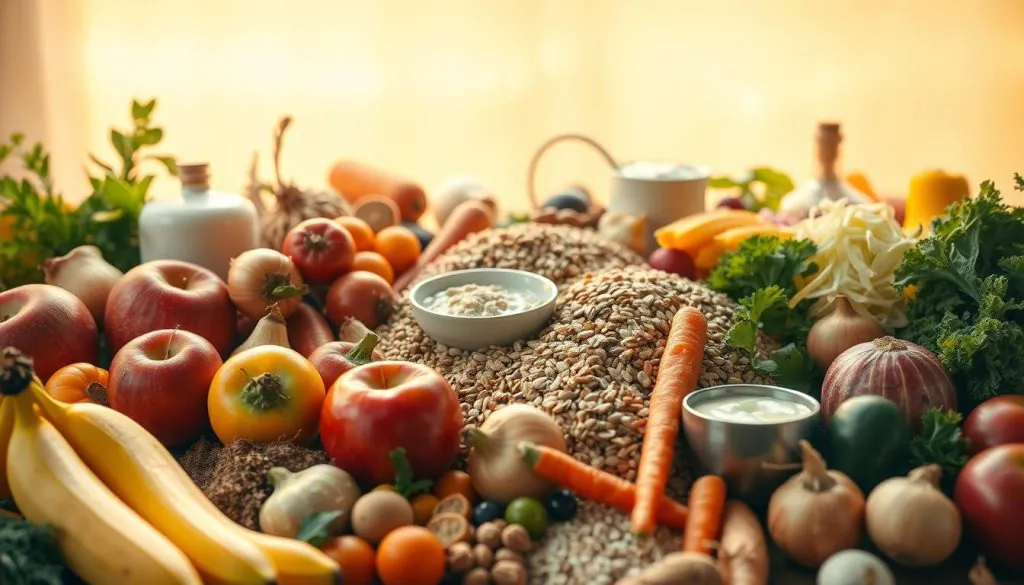
A lush, vibrant still life showcasing an assortment of prebiotic-rich foods. In the foreground, an array of colorful fruits and vegetables - ripe bananas, crisp apples, crunchy carrots, and juicy onions. In the middle ground, an array of whole grains, including hearty oats, nutty quinoa, and chewy barley. In the background, a smattering of fermented delights - tangy kefir, creamy yogurt, and pungent sauerkraut. The scene is bathed in warm, golden light, creating a cozy, inviting atmosphere. The composition is balanced and visually appealing, highlighting the natural beauty and nutritional bounty of these gut-boosting prebiotic foods.

Everyday options that work

  • Sweet potato and oatmeal give slow-release fiber and gentle calories. Add small amounts to meals to fuel friendly microbes.
  • Carrots and broccoli offer fiber and key nutrients with low sugar impact. Lightly cook if your dog has a sensitive stomach.
  • Blueberries and bananas provide prebiotic fibers but keep portions modest to manage sugar.

Label-friendly prebiotic sources

Look for chicory root (inulin) on your dog food label — it’s a common, study-backed prebiotic. Inulin ferments into SCFAs that help maintain a strong gut barrier.

  • Add small amounts of sweet potato or oatmeal to give microbes steady fuel.
  • Rotate carrots, broccoli, and fruit to diversify fibers and nutrients.
  • Start low to avoid gas; increase slowly as your pet adapts.
  • Pair these foods with a daily DLY Pets supplement to stabilize gut balance over time.
Prebiotic food Key benefit Serve suggestion Notes
Sweet potato Resistant starch 1–2 tsp per meal Cooked and mashed; low allergy risk
Oatmeal Soluble fiber 1 tsp small dogs, 1 Tbsp large Use plain, unsweetened oats
Chicory (inulin) Fermentable fiber Found in labeled foods Look for in ingredient list
Carrots / Broccoli Fiber + micronutrients Small raw or cooked pieces Cook lightly for sensitive stomachs

Tip: Pair prebiotic foods with a measured probiotic daily to give a one-two punch that supports stool quality, energy, and skin over time.

Special situations: antibiotics, allergies, and SIBO

When antibiotics, food sensitivities, or small-intestine overgrowth appear, a tailored approach works best.
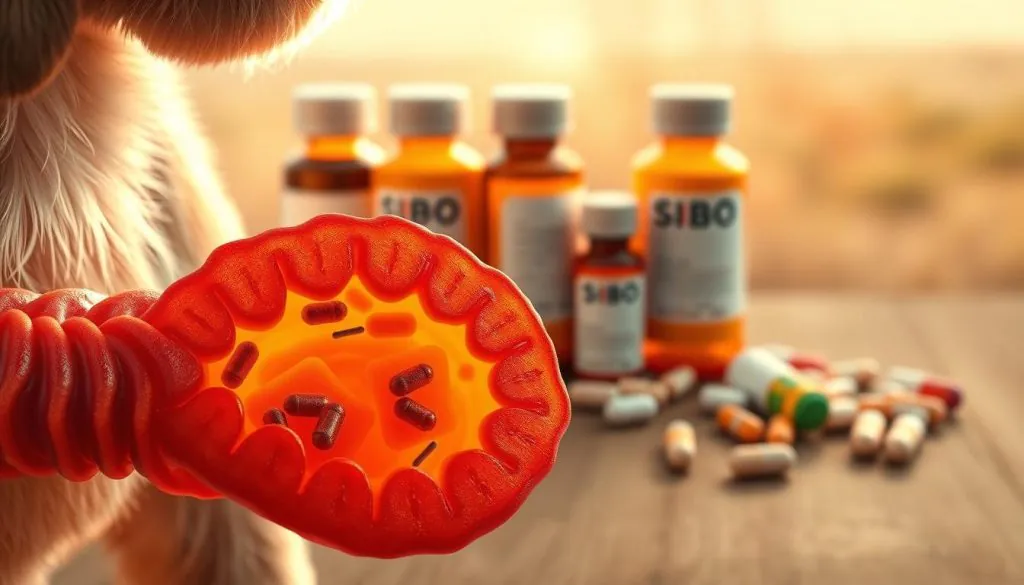
A vibrant, photorealistic image of a dog's gut, with a focus on the effects of SIBO (Small Intestinal Bacterial Overgrowth) and antibiotics. In the foreground, a detailed cross-section of the small intestine, showcasing the intricate network of villi and the disruption caused by SIBO. In the middle ground, a series of antibiotics bottles and pills, representing the common treatment approach. In the background, a muted, soft-focused landscape of the dog's digestive system, conveying a sense of the complex and delicate balance within. The lighting is warm and natural, capturing the organic nature of the subject matter. The overall mood is one of scientific investigation and understanding, inviting the viewer to explore the intricacies of gut health in dogs.

During antibiotics: favor S. boulardii or soil-based Bacillus strains (B. subtilis, B. coagulans). These hardy bacteria resist many antibiotics and can support recovery without being wiped out.

Dairy-sensitive pets and low-sugar alternatives

If your pet shows dairy intolerance, pause kefir and yogurt. Use vegetable ferments or a labeled, dairy-free supplement instead.

  • Low-sugar toppers: small portions of fermented veggies or cooked sweet potato.
  • Supplements: choose a dog-specific, dairy-free product that lists strains and CFUs.
  • Introduce one change at a time to monitor allergies and stomach reactions.

When to avoid or adjust support for suspected SIBO

Standard lactic acid bacteria can worsen symptoms if SIBO is present. If you see more gas or discomfort after starting a product, pause and consult your vet.

“If symptoms worsen, discuss SIBO testing and a soil-based plan with your veterinarian.”

Situation Best option Note
On antibiotics S. boulardii, Bacillus strains Resist antibiotics; continue per vet advice
Dairy sensitivity / allergies Veggie ferments, dairy-free supplements Low sugar; introduce slowly
Suspected SIBO Soil-based strains; vet diagnostics Standard lactic acid bacteria may worsen gas

Practical tips: keep portions small and steady — less but consistent often works better. Pick supplements that list strain names and CFUs so you can fine-tune dosing during sensitive periods.

For complex cases, combine your vet’s diagnostics with a tailored supplement plan. See a diagnostic guide to SIBO and discuss DLY Pets alongside professional advice to match strains and timing to your pet’s needs.

Easy homemade addition: a probiotic + prebiotic frozen treat

Make a cool, healthy treat that pairs live cultures and fiber into one easy freezer cube. Mix 2 cups plain Greek yogurt, 1/4 cup plain peanut butter, and 1/4 cup pumpkin puree.

A frozen homemade probiotic and prebiotic treat for dogs, artfully arranged on a rustic wooden surface. In the foreground, bite-sized nuggets of yogurt, kefir, and pureed vegetables rest atop a dusting of ground flaxseed and turmeric. The middle ground showcases fresh berries, mint leaves, and a few dog biscuits, while the background features a natural linen cloth and a subtle vignette effect, creating a warm, inviting atmosphere. Soft, natural lighting casts gentle shadows, highlighting the textures and colors of this nutritious, gut-health-boosting canine delight.

Portion into mini muffin tins or an ice tray and freeze. Keep cubes small so treat calories stay under 10% of daily intake. Start with one tiny cube, then watch stool and energy for several days.

If your pet is dairy-sensitive, swap yogurt for a dairy-free probiotic supplement blended with pumpkin and water. Avoid giving yogurt-based treats with tetracycline antibiotics like doxycycline.

  • Keep ingredient lists short—no sweeteners or added salt; verify peanut butter is xylitol-free.
  • Store frozen portions airtight and use within a few weeks.
  • Rotate in tiny bits of fermented carrots or broccoli only if tolerated.
Size Small dog Large dog
Single cube 1 cube 2 cubes
Weekly use 2–3 times 3–5 times
Notes Watch calories Pair with baseline supplement

Pair this addition with DLY Pets as your daily baseline. Remember that homemade probiotic foods lack standardized CFUs compared to supplements, so use treats for enrichment and variety, not sole nutrient sources.

“Start small, monitor responses, and ask your vet about portion guidance tailored to your dog’s size and diet.”

Conclusion

With simple food choices, helps you build a clear daily plan to support your pet’s gut. Start with a small, evidence-based dose and add a natural probiotic food topper only if tolerated.

Use prebiotic-rich meals and measured dosing. During antibiotics, favor S. boulardii or soil-based Bacillus; use lactic acid strains for stool and immune support. Begin low, go slow for 7–10 days and track stool, energy, skin, and coat.

Remember: probiotic foods make great toppers, but probiotic supplements give consistent CFUs with fewer calories. When you give dog support, keep timing steady, watch dairy with tetracyclines, and consult your vet for allergies or SIBO concerns.

With clear strains, transparent labels, and simple habits, you’ll help your dogs feel better today and protect long-term health. Pair measured food choices with DLY Pets to make daily care easier and reliable.

FAQ

What ingredients help boost gut health in your dog?

Look for fermented dairy like kefir and plain Greek yogurt, fermented vegetables such as sauerkraut and carrots, green tripe, and small servings of blueberries or bananas. Add prebiotic foods like sweet potato, oatmeal, and chicory (inulin) to feed beneficial bacteria and support digestion, skin, and coat health.

Why does your dog’s gut health matter right now?

A balanced gut microbiome supports digestion, immune function, nutrient absorption, and even mood. Poor gut balance can show up as loose stools, itchy skin, low energy, or food sensitivities, so addressing it quickly helps overall wellness.

What is the microbiome and why call it a “forgotten organ”?

The microbiome is the community of bacteria, yeasts, and other microbes in your pet’s digestive tract. It acts like an organ by producing vitamins, protecting the gut lining, and training the immune system—functions people often overlook until problems appear.

How do you judge digestive health in your dog?

Check stool quality, regularity, appetite, skin and coat condition, and energy levels. Firm, well-formed stool and steady appetite usually mean the digestive system and microbiome are in good shape.

What benefits can you expect from adding probiotic-rich foods?

You may see improved stool consistency, fewer digestive upsets after diet changes, stronger immune responses, reduced skin irritation, and a shinier coat. Benefits depend on the food, strain, and your dog’s starting condition.

When are these foods most helpful?

They help after courses of antibiotics, during travel or boarding stress, when switching diets, or after acute digestive upset. Start slowly and monitor your dog’s response over several days.

How do prebiotics and live cultures work together?

Live cultures (beneficial microbes) colonize or transiently pass through the gut, while prebiotics like inulin and resistant starch feed them. Together they boost growth of helpful bacteria and promote production of short-chain fatty acids that protect the gut lining.

What are short-chain fatty acids and why do they matter?

Short-chain fatty acids (SCFAs) are produced when microbes ferment prebiotic fibers. SCFAs nourish colon cells, lower gut inflammation, and strengthen the intestinal barrier, reducing risk of infections and sensitivities.

How should you introduce kefir to your dog?

Start with a teaspoon per 16 pounds of body weight once a day, then increase slowly if tolerated. Choose plain, unsweetened kefir with live cultures and no xylitol or added flavors.

Can you give your dog plain Greek yogurt?

Yes, if your dog tolerates dairy. Choose plain, full-fat or low-fat Greek yogurt without added sugar or artificial sweeteners. Offer small amounts and watch for diarrhea or gas, especially in lactose-sensitive pets.

Are fermented vegetables and fruits safe for your dog?

Fermented vegetables like sauerkraut and carrots can be safe in small amounts if low in salt and free from harmful additives. Fermented fruits such as blueberries and bananas are fine in moderation, but watch sugar content and portion sizes.

What about niche foods like green tripe and pickles?

Green tripe offers natural enzymes and microbes but can be strong-smelling—buy from reputable sources and serve in controlled portions. Avoid commercial pickles high in salt, vinegar, or garlic; they’re not suitable for pets.

Which microbial strains have the best evidence in dogs?

Strains with research backing include Lactobacillus and Bifidobacterium species, Enterococcus faecium, Pediococcus acidilactici, Saccharomyces boulardii (a yeast), and certain Bacillus strains like B. subtilis. Look for transparent labeling of CFU counts and strain names.

How much kefir, yogurt, or fermented veggies should you give based on size?

A general guideline is a teaspoon per 16 pounds for kefir to start. For yogurt and veggies, small dogs can have a tablespoon or two daily, while large dogs may tolerate several tablespoons. Adjust by response and total calorie intake.

When is the best time of day to give these foods?

Give with or just after a meal to buffer stomach acid and help microbes reach the intestines. Consistent timing—morning or evening—helps build routine and improves tolerance.

How should you introduce new fermented foods to a sensitive stomach?

Move slowly over 7–10 days, starting with tiny amounts and watching for diarrhea, vomiting, or increased gas. Pause if symptoms worsen and consult your veterinarian for persistent issues.

Are there risks with high-sodium ferments or added ingredients?

Yes. Avoid high-salt products, pickles with garlic or onion, and anything with xylitol. Pets with heart or kidney disease need especially low-sodium options; check labels and ask your vet if unsure.

How do fermented foods compare to probiotic supplements?

Fermented foods provide live cultures plus nutrients and fiber but vary in strain and CFU counts. Supplements offer standardized strains, targeted CFU levels, and convenience. Choose based on your dog’s needs, calorie limits, and veterinary guidance.

When might a supplement be the better option?

Use a supplement after antibiotics, for specific medical conditions like SIBO or chronic diarrhea, or when you need consistent strain and CFU dosing. Pick products with clear labeling and research-backed strains.

What’s special about DLY Pets probiotic products?

DLY Pets lists made-for-dogs strains, transparent CFU counts, and pairing suggestions. You can combine their formulas with prebiotic-rich food choices like sweet potato or oatmeal to support overall microbiome health.

Which prebiotic foods should you add to the diet?

Offer cooked sweet potato, plain oatmeal, carrots, broccoli, blueberries, and small amounts of banana. These supply resistant starches and fibers that feed beneficial microbes without excessive calories or sugars.

How do you manage probiotics during antibiotics or with allergies?

Consider Saccharomyces boulardii or specific soil-based strains during antibiotic treatment to protect gut balance. For dairy-sensitive dogs, choose low-lactose or non-dairy fermented options and low-sugar alternatives to reduce reactions.

What should you avoid if your dog has SIBO?

In SIBO cases, some live culture foods can worsen symptoms. Work with your veterinarian before adding fermented foods or broad-spectrum supplements; targeted protocols and specific strains are often safer.

Can you make an easy probiotic + prebiotic frozen treat at home?

Yes. Blend plain kefir or Greek yogurt with mashed banana and cooked sweet potato, pour into molds, and freeze. Serve small portions as a supplement to meals and monitor calorie intake.
Picture of long

long

August 18, 2025

Share this post