
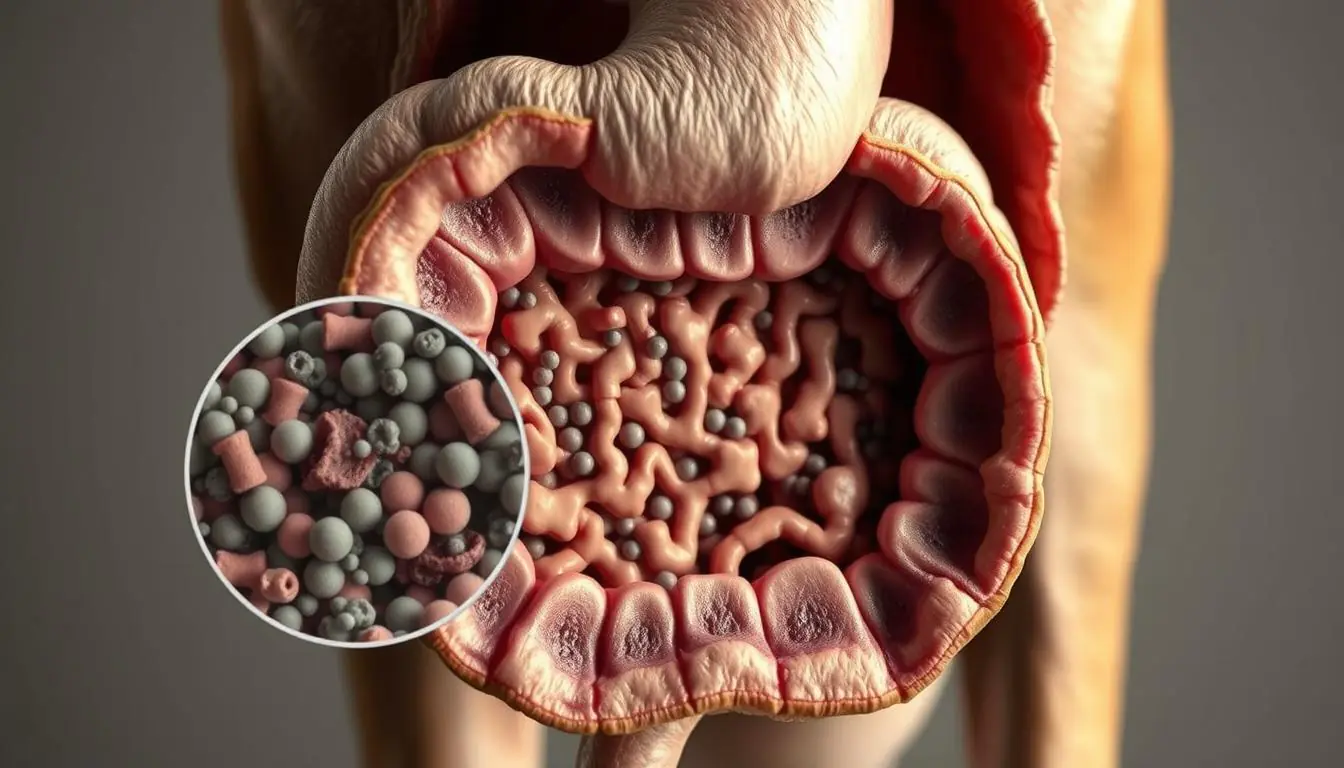
Surprising fact: studies link shifts in the canine microbiome to both chronic enteropathy and sudden hemorrhagic diarrhea, showing how big an effect gut balance has on overall health.
Short answer: yes — targeted strains can support gut balance and comfort in your pet, but results depend on strain, dose, and the underlying issue.
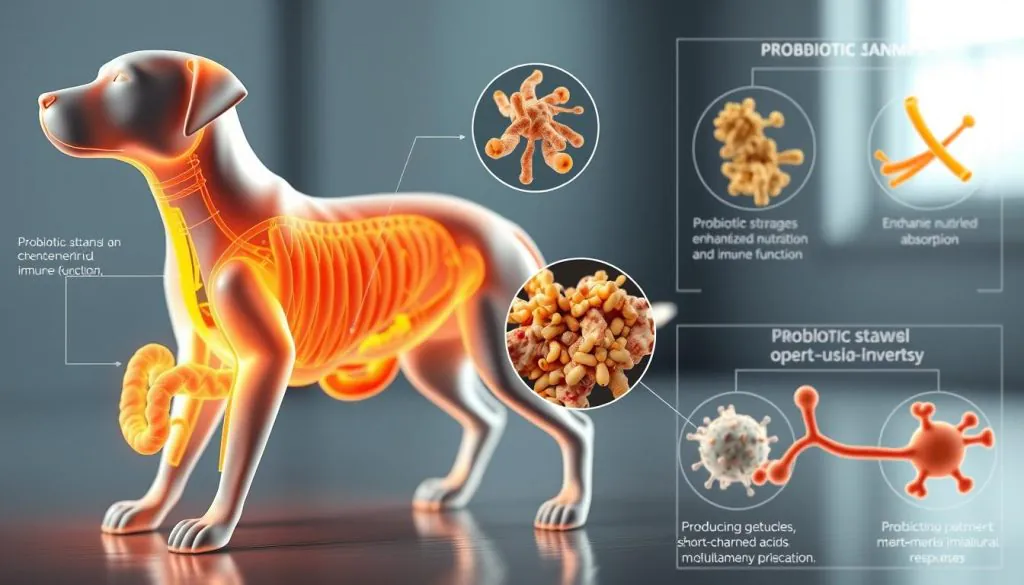
You’ll learn how beneficial microbes boost mucins, tight junctions, short-chain fatty acids, and sIgA to protect barrier function and immune balance.
We’ll explain signs of dysbiosis, what lab results mean, and how multistrain formulas have raised fecal IgA and lowered harmful clostridia in trials.
Practical note: consider a synbiotic powder like DLY Pets probiotics for dogs to pair live strains with prebiotics for targeted gut support, stool quality, and skin/ear wellness.
Beneficial microbes sit at the intersection of digestion and immunity, shaping how your pet absorbs nutrients and resists infection.
Probiotics are live strains such as Lactobacillus, Bifidobacterium, Enterococcus, and Saccharomyces that can change intestinal communities and immune responses. The canine gastrointestinal tract hosts bacteria, fungi, archaea, protists, and viruses, with the highest counts in the colon (up to 10^11 CFU/g).
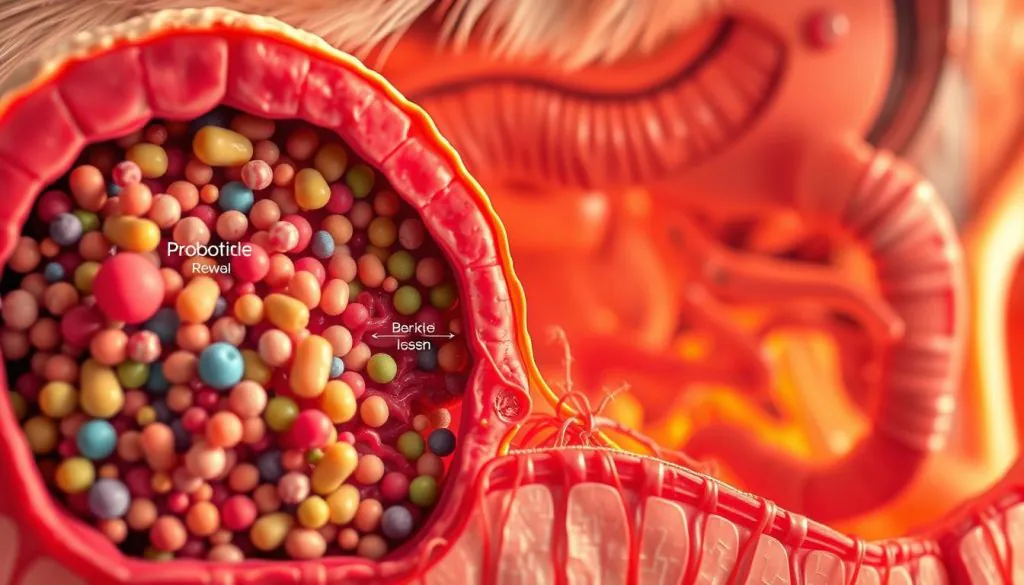
When beneficial bacteria thrive, they improve digestion and nutrient uptake. Fermentation creates short-chain fatty acids that feed colon cells and help keep the barrier intact.
Bottom line: the goal is right strains at the right dose to aid digestion and immune system balance, not just more organisms.
Veterinary trials increasingly examine strain-level outcomes and measurable markers such as fecal IgA, butyrate, and shifts in microbial balance.
Multistrain formulas in companion-animal trials have lowered Clostridium perfringens and boosted Bifidobacterium and Lactobacillus counts. Some products raised fecal IgA and plasma IgG, and a few changed fecal butyrate while reducing E. coli.
Clinical reports show the right strains can shorten the duration of acute diarrhea from about a week to just a few days, helping your pet recover faster.
Not every product produces the same effects. Two bottles with different strains can give very different changes in the microbiome and clinical symptoms.
Choose products that list strain names, CFU counts through shelf life, and handling directions to keep organisms viable.

“Many vets favor dog-specific, research-aligned synbiotic approaches when you want a reliable daily option.”
Practical note: a synbiotic like DLY Pets pairs live strains with prebiotic support to mirror what studies test and improve real-world consistency of benefits.
Beneficial strains protect the intestinal lining by limiting harmful microbes and strengthening barrier proteins.
Friendly microbes compete for space and nutrients, making it harder for harmful bacteria and yeast to settle in the gastrointestinal tract.
Many strains secrete acids and bacteriocins that lower pathogen survival. They also stimulate host defense peptides to add another layer of protection.
Some organisms promote short-chain fatty acids like butyrate. SCFAs feed colon cells and help reduce inflammation.
Probiotic activity raises mucin production and tight junction proteins, which helps keep the barrier intact and limits leakage.
Targeted microbes nudge your pet’s immune system toward calm, balanced responses.
They raise sIgA at the mucosal surface and influence T-cell cytokine patterns to lower excess inflammation.
Certain strains set the stage for others to produce protective compounds through cross-feeding, improving nutrient use and gut resilience.
| Mechanism | Effect | Practical tip |
|---|---|---|
| Colonization resistance | Lower pathogen load | Use multi-strain blends |
| Barrier support | Stronger mucins and junctions | Consistent daily dosing |
| Immune modulation | Higher sIgA, balanced cytokines | Choose strains with clinical data |
| Cross-feeding | More SCFA production | Pair with prebiotics or a synbiotic |
Practical note: a daily powder like DLY Pets can help you support barrier integrity and immune balance over time.
Early signs often include firmer stools and reduced flatulence as the gut community rebalances.
Shortened duration of acute diarrhea is one of the most consistent clinical wins. Companion-animal trials show targeted blends can cut the duration by several days, helping your pet return to normal routines sooner.
Less gas and better stool quality often appear next. Yeast-based supplements have reduced harmful E. coli and increased butyrate, which soothes the colon and calms noisy digestion.
These improvements usually link to higher fecal sIgA and shifts in beneficial microbes. Pair supplements with gentle, easily digestible meals to ease transitions during acute episodes.
| Symptom | Expected Benefit | Practical Tip |
|---|---|---|
| Loose stool / acute diarrhea | Shorter duration by several days | Start a daily synbiotic and feed bland meals |
| Excess gas / rumbling | Reduced fermentation noise | Stick to consistent dosing and avoid sudden diet changes |
| Soft, watery stool | Firmer, more formed stool | Use multistrain products with clinical data |
DLY Pets is formulated for simple daily use, making it an easy go-to when you want to support stool quality and reduce gas during occasional upsets. Stay consistent for weeks to help maintain gains.
Subtle shifts—like more gas, flaky skin, or an irregular potty routine—often signal a gut imbalance.
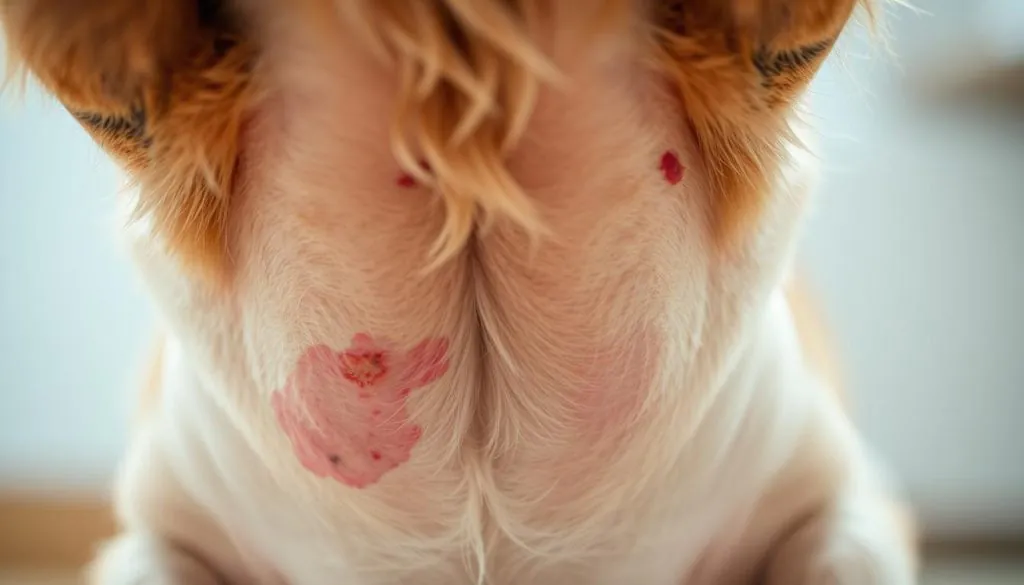
Watch for intermittent diarrhea, constipation, or a change in potty timing. These symptoms often point to a shifting gut community rather than a single cause.
Note: mild, short-lived episodes may respond to diet adjustments and a targeted probiotic at safe daily ranges (commonly 1–10 billion CFU per Cornell guidance).
Itching, dandruff, persistent odor, or repeated ear infection episodes can reflect a broken skin–gut axis. Restoring microbial balance sometimes eases these external signs.
Stress and anxiety commonly trigger digestive upset. Supporting gut balance during tense periods may help your pet recover faster.
Skin and ear flare-ups often reflect hidden shifts in gut communities and immune signaling. When Malassezia or bacterial otitis appears, gut imbalance can be a contributing factor.
Managing yeast overgrowth by restoring microbial balance
Yeast overgrowth like Malassezia and bacterial ear infections share immune drivers with the gut microbiome. Targeted strains can nudge bacterial communities toward balance and reduce recurrent overgrowth.
Supporting skin barrier function and reducing inflammation
Improved gut balance often parallels better skin comfort. Strengthened barrier function may lower itching, flare-ups, and foul odors as local inflammation falls.
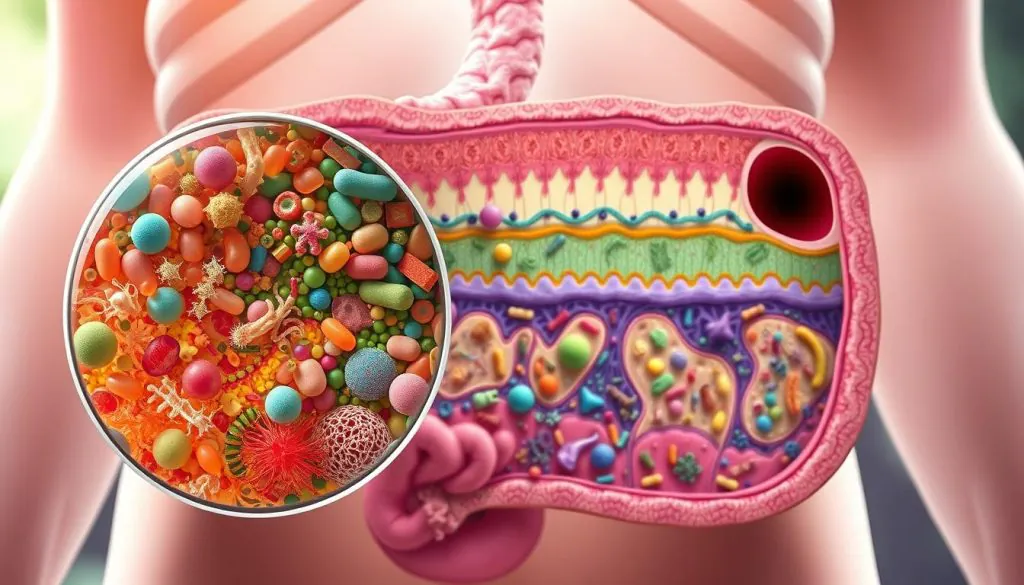
| Issue | How gut support helps | Clinical note |
|---|---|---|
| Malassezia dermatitis | May reduce recurrence by improving immune tone | Use with vet-directed topical therapy |
| Bacterial otitis | Lower inflammation and odor via immune modulation | Treat acute infection first, then maintain balance |
| Chronic itching | Supports barrier proteins and reduces flare frequency | Assess diet, allergies, and gut health together |
Practical note: DLY Pets supports the gut side of the skin–ear axis and can be paired with vet-directed topicals or medications when needed. If you see pain, heavy discharge, or repeated infections, consult your veterinarian and use gut support as part of a full plan.
Kibble-heavy meals change how the gut breaks down carbs, and that can shift fermentation patterns in ways you notice at the bowl.
Dogs are metabolically omnivorous but make less salivary amylase than people. Many dry foods are higher in carbohydrates. That combination can leave more starch for colon microbes to ferment.
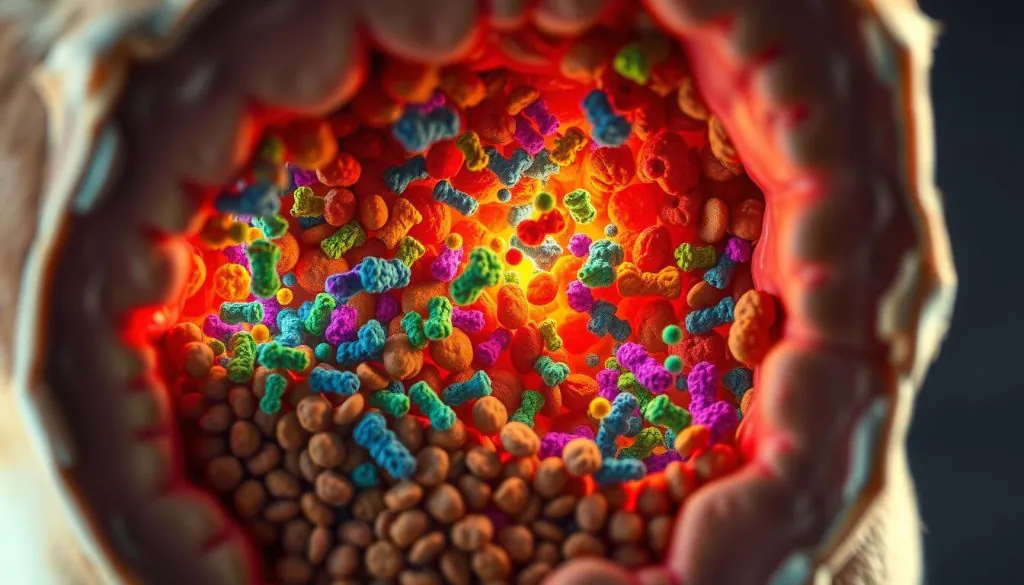
Supplemental probiotic support can guide those fermentation patterns. Targeted strains help raise short-chain fatty acids (SCFAs) and often reduce gas and looser stools by improving microbial balance.
Practical tip: DLY Pets powder layers easily onto kibble and offers steady support without changing meals. Introduce any dietary or supplement change gradually to avoid short-term upset.
Picking the right supplement starts with clear labels and strains proven to thrive in a canine gut.
Look for named strains from Lactobacillus, Bifidobacterium, and Enterococcus. These genera are commonly used because they colonize and support mucosal immunity.
Check the CFU count per serving and confirm the label guarantees that number through the end of shelf life.
Prioritize products that describe survivability through stomach acid and release into the lower gastrointestinal tract.
Powders let you dose precisely and mix with meals. Chews are handy but can vary in stability and heat exposure.
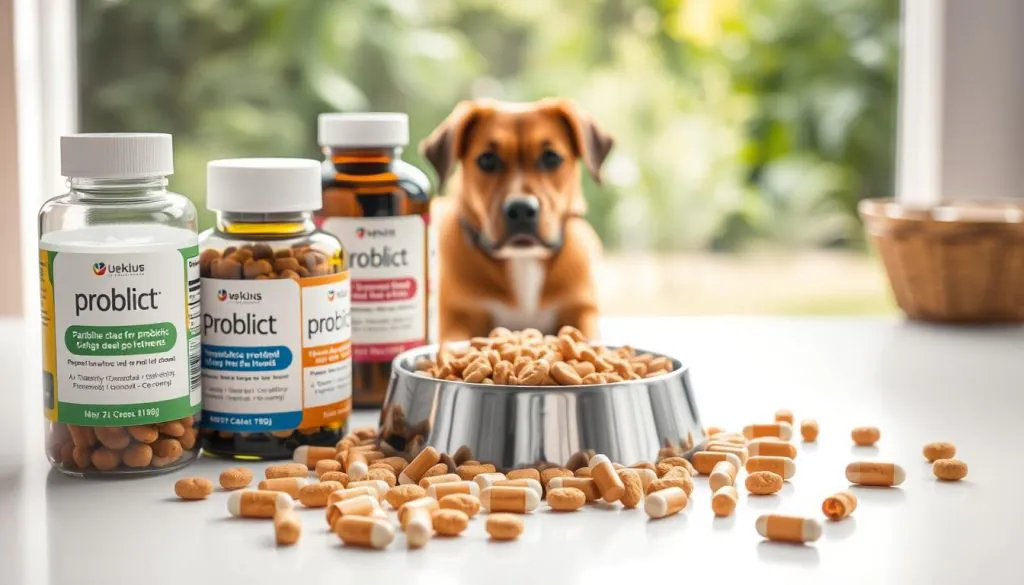
Tip: DLY Pets is a powder-style probiotic with transparent CFUs and added prebiotics to support steady daily care.
A careful mix of live cultures and nourishing fibers helps beneficial microbes survive and perform in the gut.
DLY Pets is a synbiotic powder that combines targeted probiotics with prebiotics to improve microbial survival and function. The formula is designed to raise mucosal defenses like fecal sIgA and support balanced cytokine responses.
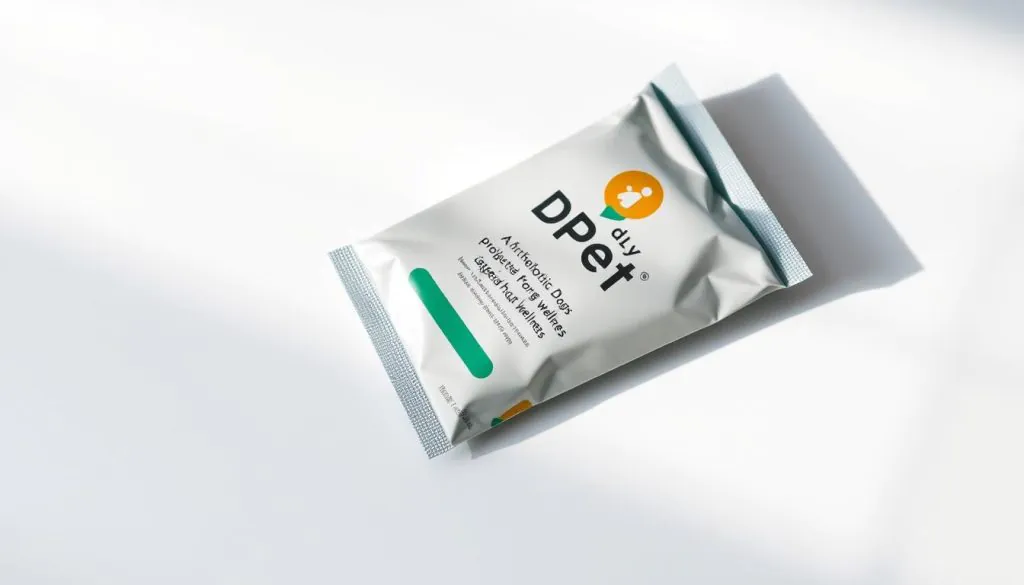
The powder is made to ease loose stool, reduce gas, and firm stool quality. It also supports the gut-skin-ear axis to lower recurrence of yeast-driven ear discomfort.
Practical note: DLY Pets fits daily routines whether you feed kibble, canned, or mixed diets and aims to support lasting gut health and comfort.
A simple, steady plan helps your pet adjust and gives you the best chance of seeing benefits.
Begin low and increase slowly. Start with a smaller serving for 2–3 days, then raise the amount until you reach the target CFU range listed on the label.
Most adult animals do well around 1–10 billion CFU per day. Move up in steps to avoid transient bloating or loose stool.
Give the supplement with meals to buffer stomach acid and boost survivability into the intestine. Early wins like less gas and firmer stool can show in days.
Stronger, lasting benefits usually need consistent use over a 2–4 week duration. If you change diet, start the product a few days before the switch to ease transition.
“Start slowly, pair with meals, and stay consistent — the microbiome responds to steady care.”
| Step | Action | Tip |
|---|---|---|
| Intro | Small amount 2–3 days | Watch stool and gas |
| Titrate | Increase to target CFU | Follow label by weight |
| Maintain | Daily with meals | Use for several weeks |
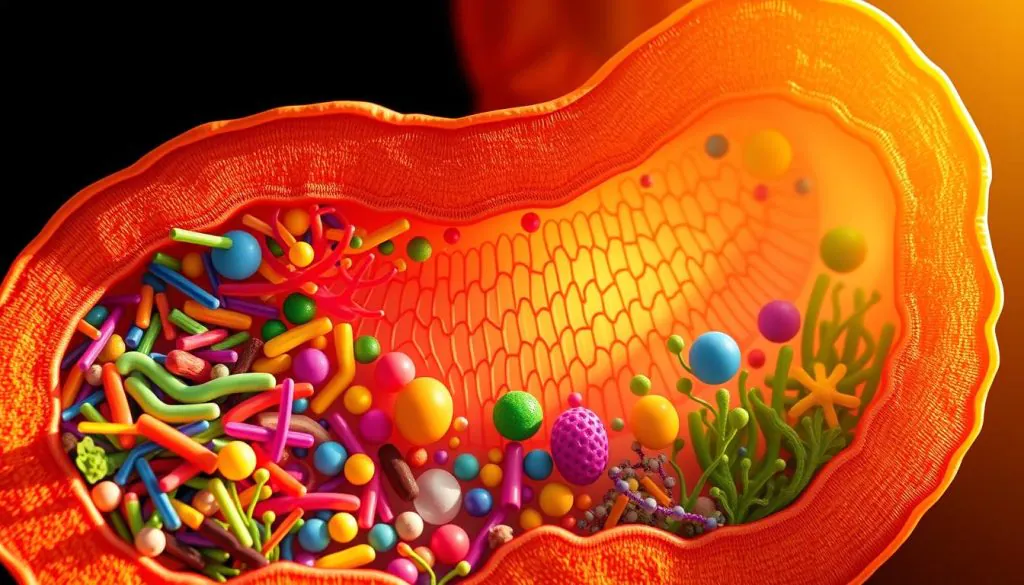
Puppyhood is a high-impact window when microbes influence growth, immunity, and digestion. Early microbial signals help shape long-term gut balance and how your pet handles nutrients during rapid growth.
Puppies build their gut community from scratch. That makes early support especially meaningful during weaning and training.
Balanced microbes help educate the developing immune system and support steady digestion. This can reduce loose stools during diet changes and ease transitions when you introduce new food or environments.
Work with your veterinarian on puppy-specific dosing, especially for tiny or medically fragile breeds. With vet guidance, a gentle daily powder such as DLY Pets can help maintain continuity as your pup meets new foods and people.
For practical guidance on choosing products, see this AKC guide on choosing probiotics.
A synbiotic blends active cultures and nourishing fibers so the microbes you add have the fuel they need.
Probiotics are live strains you give to support gut health. Prebiotics are fermentable fibers that feed those strains and the microbes already in your pet’s gut.
Synbiotics combine both. That pairing often boosts short-chain fatty acid production and helps create a steadier gut balance. You’ll see fewer swings during diet changes and stress.

Practical note: DLY Pets is a synbiotic powder that pairs targeted strains with named fibers to simplify daily care and support lasting gut balance. Over time, better balance means more comfortable digestion and a happier companion.
Mild digestive shifts are common when you introduce new microbial supplements, and they usually settle in a few days. Brief gassiness, slight bloating, or softer stool can happen as the gut community adapts.
How to manage normal adjustments: start with a smaller amount, increase slowly, and give the product with a meal. If sensitivity appears, pause or lower the dose until your pet settles.

Avoid human products: some contain sweeteners like xylitol or fillers that are unsafe. Use dog-focused products with clear strain names and storage directions.
“Supplements support treatment but are not replacements for prescribed medicines.”
Choose a tailored option such as DLY Pets, which is formulated for dogs and can be introduced gently to reduce adjustment bumps. When symptoms are severe, contact your vet — quick action protects health and prevents complications.
Sequencing of stool samples highlights the microbial cast that supports a resilient gut and the players that increase with infection.
Healthy profiles tend to include Firmicutes, Bacteroidetes, Fusobacteria, Proteobacteria, and Actinobacteria. SCFA producers such as Faecalibacterium and Blautia are common and help nourish the colon.
When illness appears, overall diversity often falls. Firmicutes and butyrate makers drop while Proteobacteria can rise. Chronic enteropathy often shows less Faecalibacterium and overgrowth of Clostridium perfringens, which undermines barrier function.
Practical takeaway: targeted probiotics can nudge the ecosystem back toward SCFA producers and lower opportunistic overgrowth. You can’t micromanage each genus at home, but daily, dog-specific support helps guide the trend.

| Group | Role | When it shifts |
|---|---|---|
| Faecalibacterium / Blautia | Butyrate production | Falls in chronic disease |
| Proteobacteria | Opportunistic growth | Rises with dysbiosis |
| Firmicutes | Community stability | Often reduced in illness |
“Watch stool quality and comfort; these are the clearest signals your pet’s gut is shifting.”
DLY Pets offers a straightforward synbiotic approach that aligns with features seen in healthy canine profiles and helps you support lasting gut health.
, A clear, steady plan can turn small gut shifts into lasting comfort for your pet.
Probiotics modulate the microbiota, strengthen the intestinal barrier, and support immune balance. Clinical data link targeted use to shorter episodes of diarrhea and firmer stool when given at safe CFU ranges (typically 1–10 billion daily).
Results depend on strains, consistent dosing, and gradual introduction. Pair supplements with a sensible diet and routine vet care to get the most health gains over weeks.
Practical pick: choose a dog-specific powder you can add at mealtime. DLY Pets probiotics for dogs offers a research-aligned synbiotic option that makes daily support simple and reliable.
