

One in three dogs shows subtle stool changes after a course of antibiotics, yet many owners miss the signs. That gap can mean missed chances to support your pet’s gut and overall health.
You’ll learn how the canine microbiome works and why the right gut-support choices matter. Short, evidence-informed tips will help you pair fermented food and a made-for-dogs supplement safely.
Dog-specific strains with transparent CFU counts that complement fermented food sources like kefir or yogurt. Kefir, when used properly, can raise beneficial lactic acid bacteria with minimal side effects; start very small and avoid mixing with tetracycline antibiotics.
This section sets the stage: expect simple strain names, serving guidance, and signs that suggest your pet may benefit now. You’ll get practical steps to test changes in stool quality, energy, and coat health without adding excess calories.
Your dog’s gut affects far more than digestion—it’s tied to immunity, mood, and recovery. The community of microbes inside the intestines is often called the forgotten organ because it works quietly, every day.
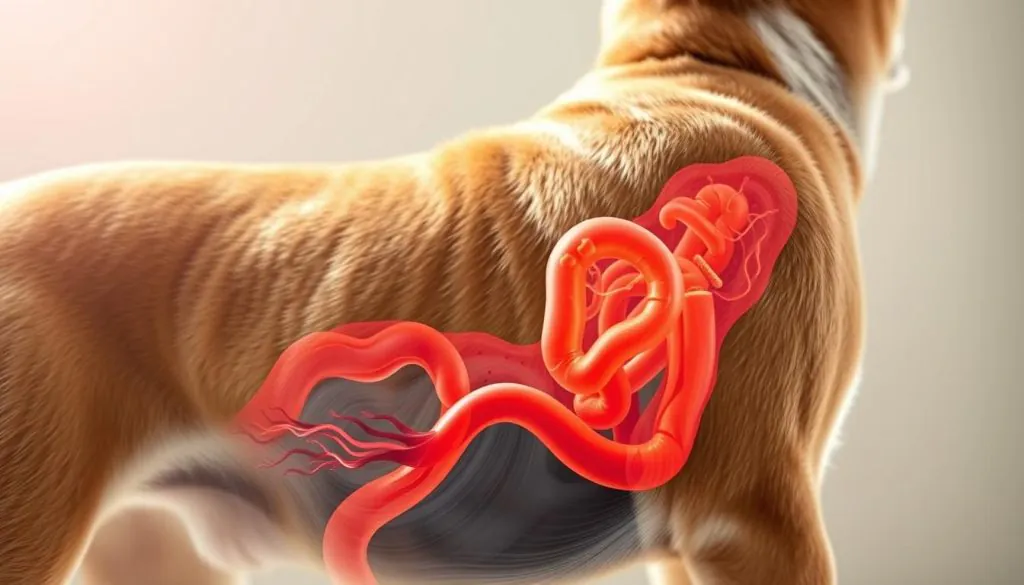
The microbiome controls vitamin K and B production, makes short-chain fatty acids like acetate and butyrate, and helps keep the mucosal barrier strong. These SCFAs lower gut pH, feed friendly bacteria, and protect against a leaky gut.
About 80% of the immune system lives in the gut. Balanced microbes crowd out harmful strains and lower chronic inflammation risk. You’ll often notice firmer, more regular stools when the system is in balance.
| Benefit | What to watch | Action |
|---|---|---|
| Better digestion | Firmer stools, regularity | Adjust diet, consider targeted supplements |
| Stronger immunity | Fewer flare-ups, faster recovery | Add prebiotic fibers and safe strains |
| Improved mood | Steadier energy, less anxiety | Support microbial diversity in meals |
With clear strain labels and CFU counts, it’s an easy next step when you need targeted support.
Timed use of specific strains gives fast relief when your pet faces stress or antibiotics.
Dog gut health often improves quickly when you add targeted support. Expect firmer stools, less gas, and fewer tummy rumbles as microbes help your pet digest food more efficiently.
Other common benefits include healthier skin and a softer coat as gut balance lowers inflammatory signals to the body.
Use supplements after antibiotics, during travel, boarding, fireworks, or quick diet changes. These are peak times the microbiome needs help.
Lactic acid strains work well short-term, while S. boulardii and soil-based Bacillus resist antibiotics and aid recovery.
Start small with sensitive animals and monitor stool, appetite, and energy for 7–10 days. With simple timing and steady use, you’ll often see improvements in days and clearer gains over time.
Pairing live microbes with the right fibers turns short-term fixes into lasting gut resilience.
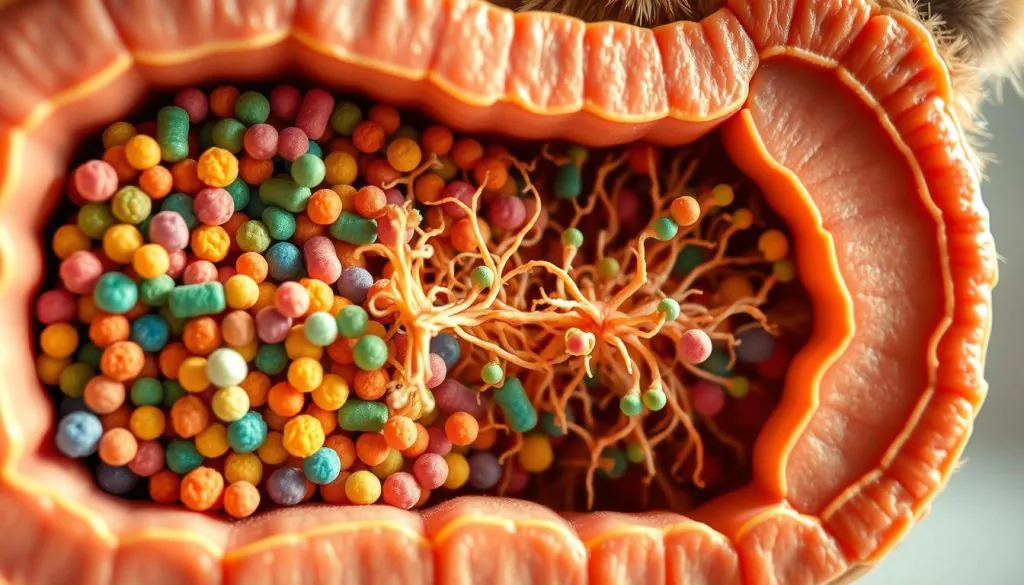
Probiotics deliver live, beneficial microbes that can help digestion and immune signals.
Prebiotics are fermentable fibers like inulin from chicory that feed those microbes so they stay active.
When prebiotics ferment, they create short-chain fatty acids—acetate, propionate, and butyrate. These acids help form mucus, keep tight junctions strong, and lower gut pH to slow harmful bacteria.
Small servings of fermented foods often deliver measurable gut benefits fast. Use these items as toppers or treats so you control calories and ingredients. Pair them with a measured supplement for steady CFUs.
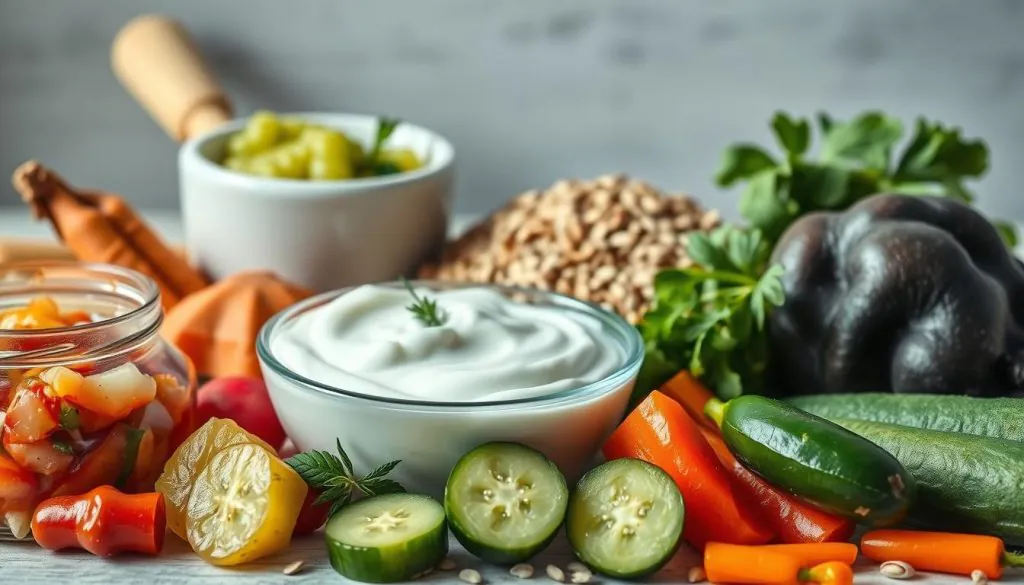
Start with 1/4 teaspoon and work up slowly to roughly 1 teaspoon per 16 lb daily. Kefir raised lactic acid bacteria in trials, but avoid it with tetracycline antibiotics or if your pet is dairy-sensitive.
Pick plain, unsweetened Greek yogurt that lists live cultures like Streptococcus thermophilus and Lactobacillus bulgaricus. Skip flavored or sugary varieties, and don’t give yogurt with tetracyclines.
Finely chopped carrots, broccoli, or sauerkraut add Bifidobacteria and Lactobacillus; start at about 1/2 teaspoon. Blueberry or banana ferments can help but watch sugar—begin with one blueberry twice daily.
Pickles are high in sodium and often flavored with garlic or onion; use tiny amounts only. Green tripe contains beneficial bacteria like L. acidophilus but buy from reputable sources and handle raw safely.
Not all strains work the same; some target stool quality while others support skin and immunity. Below are evidence-backed options you can look for on labels.
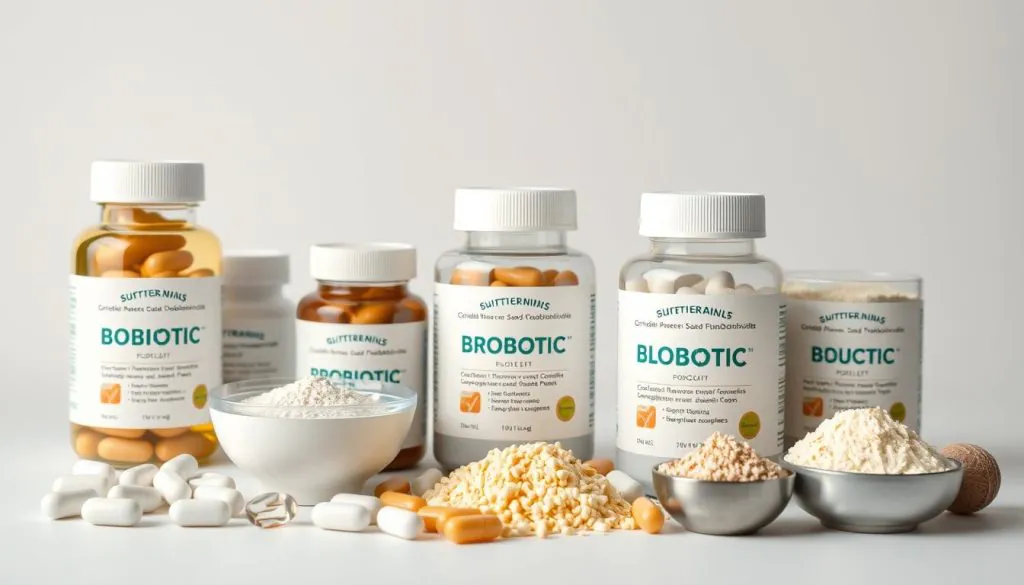
Lactic acid bacteria such as L. acidophilus, L. rhamnosus, L. plantarum, and Bifidobacterium longum support digestion, stool quality, and immune tone. They help with diarrhea and may ease stress-related gut changes.
Enterococcus faecium often survives stomach acid and can inhibit harmful microbes along the digestive tract. Pediococcus acidilactici shows promise for skin issues and leaky gut.
This yeast probiotic resists many antibiotics and helps acute or chronic diarrhea. It’s a solid choice when you need protection during medication.
Bacillus subtilis, B. coagulans, and B. indicus are hardy, anti-inflammatory, and often effective at lower CFUs. B. indicus can add antioxidant carotenoids and B vitamins.
Small, steady portions help you build gut support while avoiding extra calories. Start slowly and watch how your pet responds across the first 7–10 days.

Begin at 1/4 teaspoon and increase only if your dog tolerates it. A practical target is about 1 teaspoon per 16 pounds of body weight each day once tolerated.
Avoid kefir while your pet takes doxycycline or other tetracycline antibiotics.
Use plain Greek yogurt. Aim for about 1 teaspoon daily for small dogs and up to 1 tablespoon for large dogs.
Offer fermented veggies or fruits conservatively: 1–2 tablespoons for small dogs, up to 1/4 cup for large dogs. Monitor weight and adjust treats so calories stay under 10% of daily intake.
Pick a steady moment in your day to give supplements so your dog builds a reliable routine.

Consistency beats precision. Most dogs do best when you give a dose at the same mealtime each day. That helps steady levels in the gut and makes dosing simple to remember.
Many lactic acid strains do better with food. Meals buffer stomach acid and help more live cells survive to reach the system.
“Hardy strains such as S. boulardii and soil-based Bacillus often tolerate being given with or without food, including during antibiotics.”
| Timing Option | Best with | When to use |
|---|---|---|
| Mealtime (single dose) | Regular kibble or wet food | Daily habit for most dogs; boosts lactic acid survival |
| Split doses (AM/PM) | Smaller meals | Sensitive stomachs or large dogs needing gradual exposure |
| Anytime (hardy strains) | With or without food | During antibiotics or when routine is unpredictable |
Track results: watch stool and behavior and adjust timing that suits your dog’s routine and system.
Start every new gut-support food slowly so you can spot reactions quickly. Introduce new items across 7–10 days and watch stool, appetite, and skin. Short, steady steps cut the risk of GI upset and make it easier to trace any triggers.
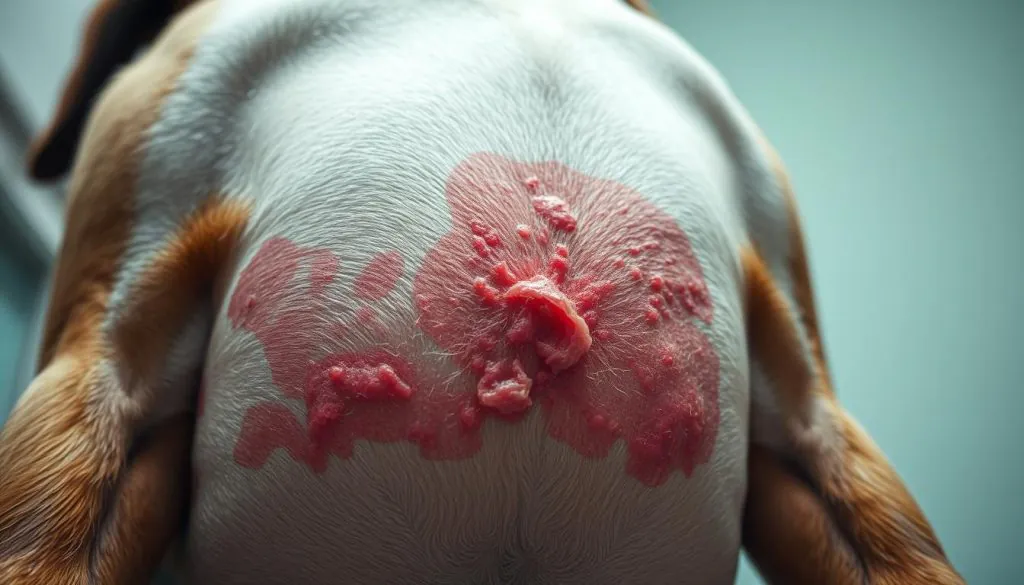
Begin small. Offer tiny amounts for the first three days, then increase if all looks good. Keep toppers under 10% of daily calories to avoid weight gain.
Pickled foods like sauerkraut and store pickles can be high in salt. Dogs with heart, kidney, or hypertension issues should avoid salty ferments.
Read labels: avoid added garlic, onion, spices, and sweeteners such as xylitol. Live bacteria counts vary widely in foods, so consider a clean-label supplement instead.
“Lean on a dog-specific option with transparent ingredients and CFU counts when you need consistent, safe results.”
| Risk | Watch for | Action |
|---|---|---|
| Allergies | Itch, swelling, GI upset | Stop new food; consult your vet |
| High sodium | Increased thirst, edema | Avoid pickles; choose low-salt options |
| Variable bacteria | Unpredictable effects | Use DLY Pets supplements for clear dosing |
Ask your vet about timing and interactions if your dog is on medications or has chronic conditions.
Choosing between a food topper and a precision supplement means weighing calories, consistency, and published research. Small servings of fermentable foods can add beneficial microbes, but they rarely deliver consistent CFUs or study-backed dosing.
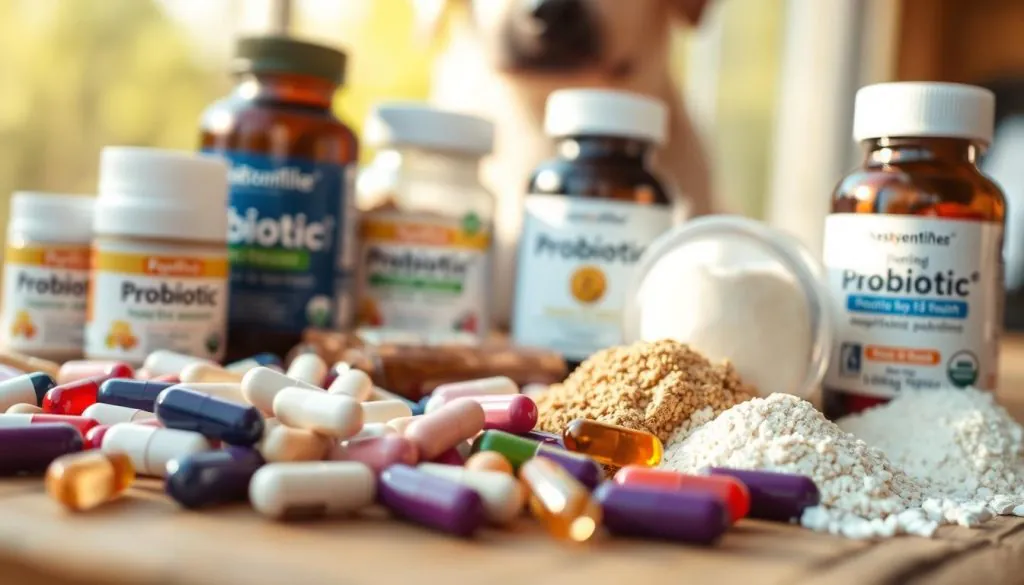
Supplements typically list strain names and CFUs per serving, so you know the potency your pet gets every day. Clinical research generally tests measured products, not homemade toppers, so evidence favors targeted supplements.
Foods can be useful as toppers, but hitting therapeutic CFU levels often requires large servings that add calories and may unbalance the diet.
Pick a supplement when you need fast, repeatable results—during antibiotics, chronic gut issues, or weight-managed plans. DLY Pets offers made-for-dog strains, clear CFU transparency, and low-calorie delivery in chews, powders, and capsules.
Here’s a focused look at how one brand delivers consistent, vet-minded gut support you can trust.
DLY Pets lists strain names and CFU counts so you know what you give your pet. Look for multi-strain blends with Lactobacillus, Bifidobacterium, Enterococcus, Pediococcus, S. boulardii, and Bacillus.
Labels that show end-of-shelf-life CFUs give you real assurances about potency. That matters when you need steady results for stool quality, skin, and immune balance.
Pair this product with prebiotics like chicory/inulin or fiber-rich veggies to boost SCFA production. A simple daily topper or prebiotic kibble helps the strains thrive.
“Choose transparent labels and vet-minded formulas to make daily gut support simple and reliable.”
A few simple foods supply the fermentable fibers that keep gut communities strong. Prebiotics are indigestible fibers that feed probiotics and help the microbiome produce protective short-chain fatty acids. These SCFAs support the gut lining and reduce harmful bacteria growth.
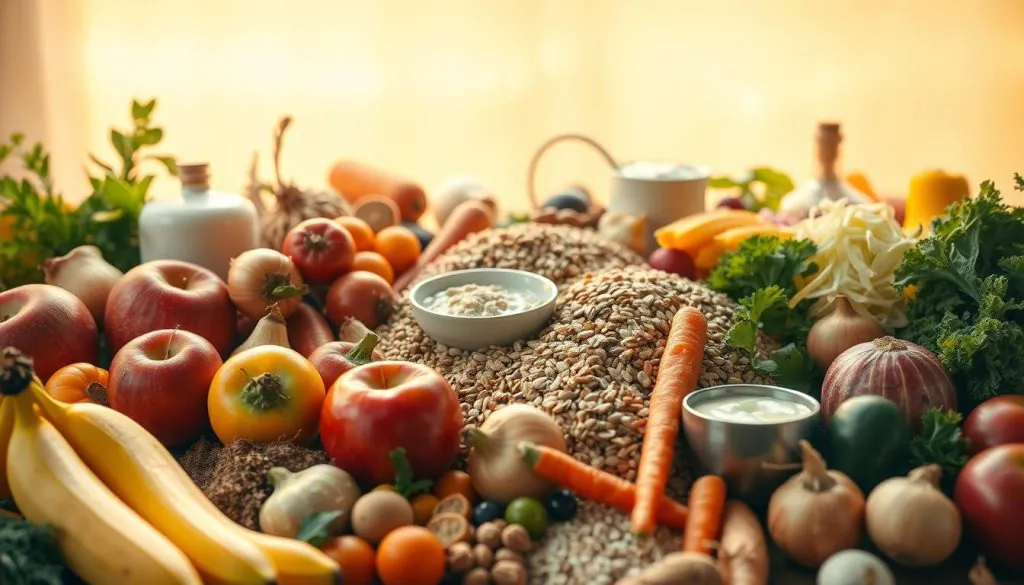
Look for chicory root (inulin) on your dog food label — it’s a common, study-backed prebiotic. Inulin ferments into SCFAs that help maintain a strong gut barrier.
| Prebiotic food | Key benefit | Serve suggestion | Notes |
|---|---|---|---|
| Sweet potato | Resistant starch | 1–2 tsp per meal | Cooked and mashed; low allergy risk |
| Oatmeal | Soluble fiber | 1 tsp small dogs, 1 Tbsp large | Use plain, unsweetened oats |
| Chicory (inulin) | Fermentable fiber | Found in labeled foods | Look for in ingredient list |
| Carrots / Broccoli | Fiber + micronutrients | Small raw or cooked pieces | Cook lightly for sensitive stomachs |
Tip: Pair prebiotic foods with a measured probiotic daily to give a one-two punch that supports stool quality, energy, and skin over time.
When antibiotics, food sensitivities, or small-intestine overgrowth appear, a tailored approach works best.
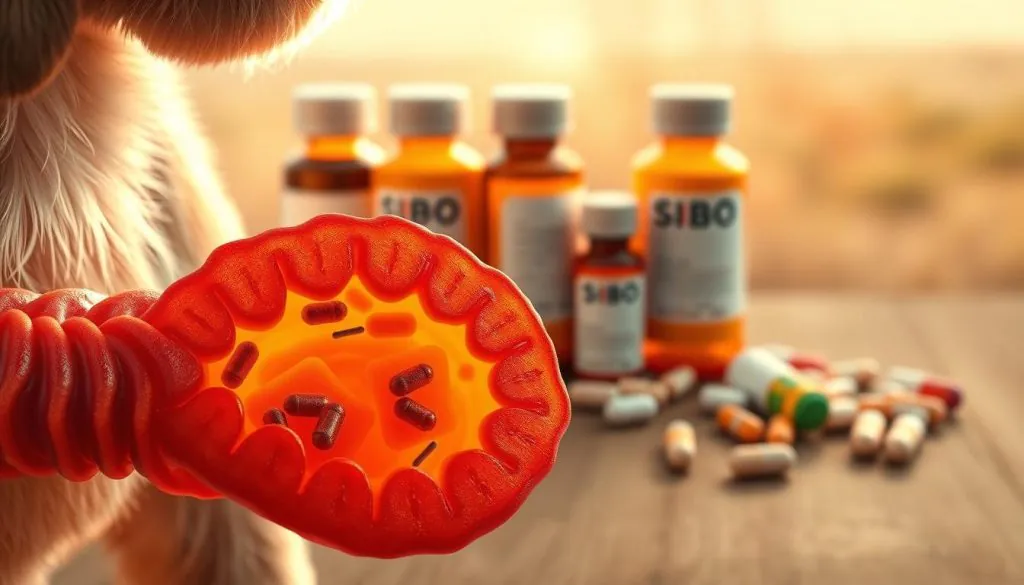
During antibiotics: favor S. boulardii or soil-based Bacillus strains (B. subtilis, B. coagulans). These hardy bacteria resist many antibiotics and can support recovery without being wiped out.
If your pet shows dairy intolerance, pause kefir and yogurt. Use vegetable ferments or a labeled, dairy-free supplement instead.
Standard lactic acid bacteria can worsen symptoms if SIBO is present. If you see more gas or discomfort after starting a product, pause and consult your vet.
“If symptoms worsen, discuss SIBO testing and a soil-based plan with your veterinarian.”
| Situation | Best option | Note |
|---|---|---|
| On antibiotics | S. boulardii, Bacillus strains | Resist antibiotics; continue per vet advice |
| Dairy sensitivity / allergies | Veggie ferments, dairy-free supplements | Low sugar; introduce slowly |
| Suspected SIBO | Soil-based strains; vet diagnostics | Standard lactic acid bacteria may worsen gas |
Practical tips: keep portions small and steady — less but consistent often works better. Pick supplements that list strain names and CFUs so you can fine-tune dosing during sensitive periods.
For complex cases, combine your vet’s diagnostics with a tailored supplement plan. See a diagnostic guide to SIBO and discuss DLY Pets alongside professional advice to match strains and timing to your pet’s needs.
Make a cool, healthy treat that pairs live cultures and fiber into one easy freezer cube. Mix 2 cups plain Greek yogurt, 1/4 cup plain peanut butter, and 1/4 cup pumpkin puree.

Portion into mini muffin tins or an ice tray and freeze. Keep cubes small so treat calories stay under 10% of daily intake. Start with one tiny cube, then watch stool and energy for several days.
If your pet is dairy-sensitive, swap yogurt for a dairy-free probiotic supplement blended with pumpkin and water. Avoid giving yogurt-based treats with tetracycline antibiotics like doxycycline.
| Size | Small dog | Large dog |
|---|---|---|
| Single cube | 1 cube | 2 cubes |
| Weekly use | 2–3 times | 3–5 times |
| Notes | Watch calories | Pair with baseline supplement |
Pair this addition with DLY Pets as your daily baseline. Remember that homemade probiotic foods lack standardized CFUs compared to supplements, so use treats for enrichment and variety, not sole nutrient sources.
“Start small, monitor responses, and ask your vet about portion guidance tailored to your dog’s size and diet.”
With simple food choices, helps you build a clear daily plan to support your pet’s gut. Start with a small, evidence-based dose and add a natural probiotic food topper only if tolerated.
Use prebiotic-rich meals and measured dosing. During antibiotics, favor S. boulardii or soil-based Bacillus; use lactic acid strains for stool and immune support. Begin low, go slow for 7–10 days and track stool, energy, skin, and coat.
Remember: probiotic foods make great toppers, but probiotic supplements give consistent CFUs with fewer calories. When you give dog support, keep timing steady, watch dairy with tetracyclines, and consult your vet for allergies or SIBO concerns.
With clear strains, transparent labels, and simple habits, you’ll help your dogs feel better today and protect long-term health. Pair measured food choices with DLY Pets to make daily care easier and reliable.
