

Surprising fact: up to 70% of a dog’s immune cells live in the gut, so tiny microbes can shape big outcomes for your pet’s health.
You want clear guidance on how supplements fit into your pup’s routine and how needs change as they grow. This intro gives a quick, honest overview so you can choose with confidence.
We define probiotics simply: live bacteria and yeasts that support digestion, nutrient absorption, and a balanced gut. They are measured in CFUs, which estimate viable cells; the right number depends on life stage and goals.
Later, you’ll see side-by-side differences between puppy-friendly strains and adult-focused blends. We’ll also point you to trusted products, including DLY Pets probiotics for dogs, which emphasize gentle CFUs and age-appropriate strains.
Because up to 70% of immunity sits in the digestive tract, targeted daily care pays off. Adding the right supplement helps shape local acidity and encourages short-chain fatty acids that make it harder for harmful bacteria to take hold.

In the U.S. today, modern stressors—travel, boarding, moves, or diet shifts—raise the chance of diarrhea and mild gastrointestinal upset. A study-led approach and transparent labeling matter most: look for exact species and strains, CFU counts, a live-organism guarantee, and a clear expiration date.
Daily dosing in the recommended 1–10 billion CFU range can support a healthy gut and the immune system that lives there. Choose convenient, palatable products that fit routine care; DLY Pets probiotics for dogs are designed to be simple to give during regular wellness or before a stressful event.
For an evidence-based primer on probiotic benefits and study-backed strain choices, see this guide from Cornell on canine gut health.
A puppy’s digestive ecosystem is changing fast, which affects nutrient uptake and immune tuning. Young dogs need steady support as their gut and immune systems mature.
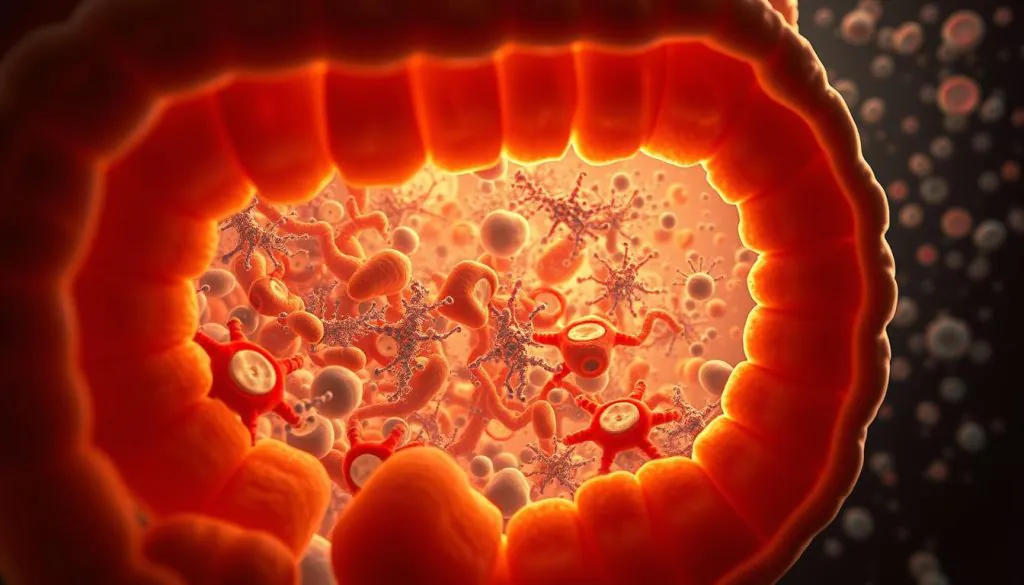
About 70% of the immune system lives in the gastrointestinal tract, so early balance matters. An immature immune response means your young dog may get loose stool during vaccinations, teething, or moves.
“Early gut care can set the stage for lifelong digestive resilience.”
Diet switches, new environments, and training stress often disrupt gut bacteria and microorganisms. That can reduce nutrient absorption during rapid growth.
| Trigger | Impact | Practical tip |
|---|---|---|
| Food change | Loose stool, poor absorption | Slow transition; consider gentle supplements |
| Travel or boarding | Stress-related upset | Short course of proven products before travel |
| Early infections | Microbial imbalance | Ask your vet about age-appropriate options like DLY Pets probiotics for dogs |
When you add the right supplement to your dog’s routine, you can expect clearer gains in digestion, immune balance, behavior, and skin health. Below are the practical benefits many owners report after daily use.
Digestive relief is the most immediate payoff. These supplements help firm loose stool, reduce episodes of diarrhea, and ease gas during diet changes or travel.
Lactobacillus acidophilus is often noted for improving stool quality and regularity. Strains like B. animalis AHC7 and S. boulardii can help with acute upset.
By competing with harmful bacteria and shifting local acidity, live strains normalize the gut environment. Because much of the immune system lives in the gut tract, this balance can reduce low-level inflammation and support daily health.
Some strains, including BL999 (Bifidobacterium longum), show promise in easing anxiety-linked behaviors. A steadier gut can lead to calmer responses during training, boarding, or vet visits.
Improvements in the microbiome often show up on the outside. When the gut is balanced, many dogs have less itching, milder odor, and reduced shedding over time.
Tip: Choose gentle, evidence-led options like DLY Pets probiotics for dogs when addressing loose stool or mild skin issues during transitions. Pair daily use with a steady diet and fresh water for best results.
Different life stages demand different bacterial allies. When you pick a supplement, match the strain to the outcome you want: stool quality, immune support, or calming gut-brain effects.
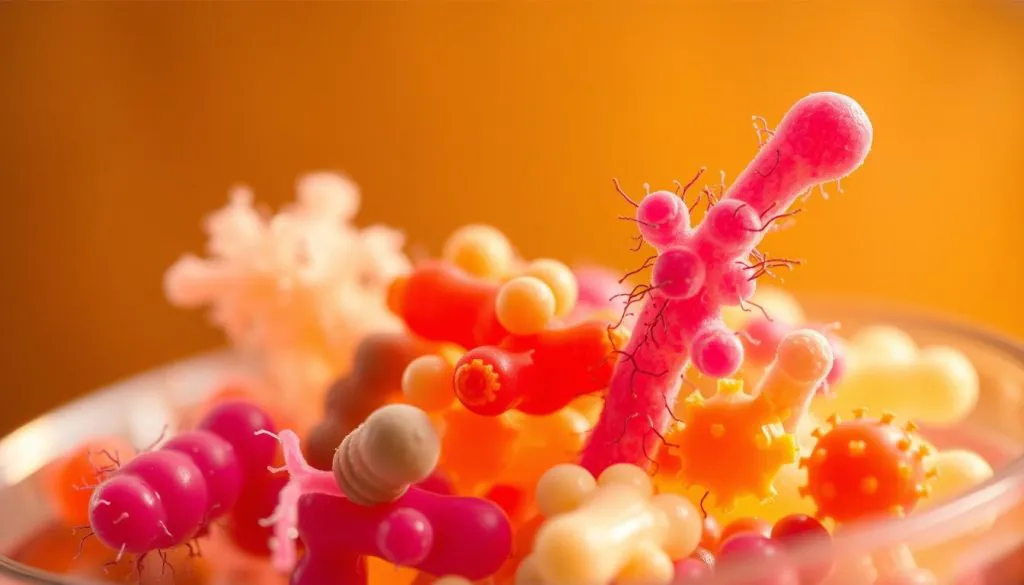
Look for gentle, well-studied strains such as Lactobacillus acidophilus and Bifidobacterium animalis. These help with digestion and can ease transition-related loose stool.
BL999 is often included to support anxiety-linked digestive responses during training or travel.
Adult formulas commonly use Enterococcus faecium SF68, Saccharomyces boulardii, and L. plantarum. These tend to target enteropathies and faster recovery from diarrhea.
Daily dosing generally falls in the 1–10 billion CFUs range. Start at the lower end for maintenance and sensitive young dogs, and move upward within that range during flare-ups under veterinary guidance.
Tip: Puppy picks like DLY Pets probiotics for dogs pair gentle CFUs with complementary prebiotics to support daily balance. For more background on choosing age-appropriate products, see this probiotic benefits and best practices.
The number on the bottle is just the beginning. You need clear CFU labeling, exact strain names, and proof that live cultures survive until the expiration date.

Aim for 1–10 billion CFUs per day as a general guideline. Match the dose to your dog’s size and whether you seek maintenance or help during diarrhea.
Demand exact species and strain IDs like Enterococcus faecium SF68 or Bifidobacterium animalis AHC7. These names let you check any supporting study and confirm targeted benefits.
Look for a live-organism guarantee through the expiration date and a clear storage statement. U.S. manufacturing, GMP or NASC compliance, and third-party testing are strong quality cues.
| Label item | Why it matters | What to check | Practical tip |
|---|---|---|---|
| CFUs at expiry | Shows real potency | Number per serving at end of shelf life | Choose products with clear CFU counts |
| Exact strain IDs | Benefits are strain-specific | Species and strain code present | Research the strain’s study backing |
| Manufacturing & testing | Assures identity and potency | GMP/NASC and third-party results | Prefer U.S.-made items with certificates |
| Storage instructions | Preserves microorganisms | Temperature and humidity guidance | Store as recommended; powders often last longer |
Tip: Consider DLY Pets probiotics for dogs when you want clear CFU labeling, puppy-friendly CFUs, and U.S.-standard quality assurance.
Pick a format that preserves potency in your local environment and fits mealtimes. The delivery form you choose affects stability, dosing, and how easy it is to give daily.
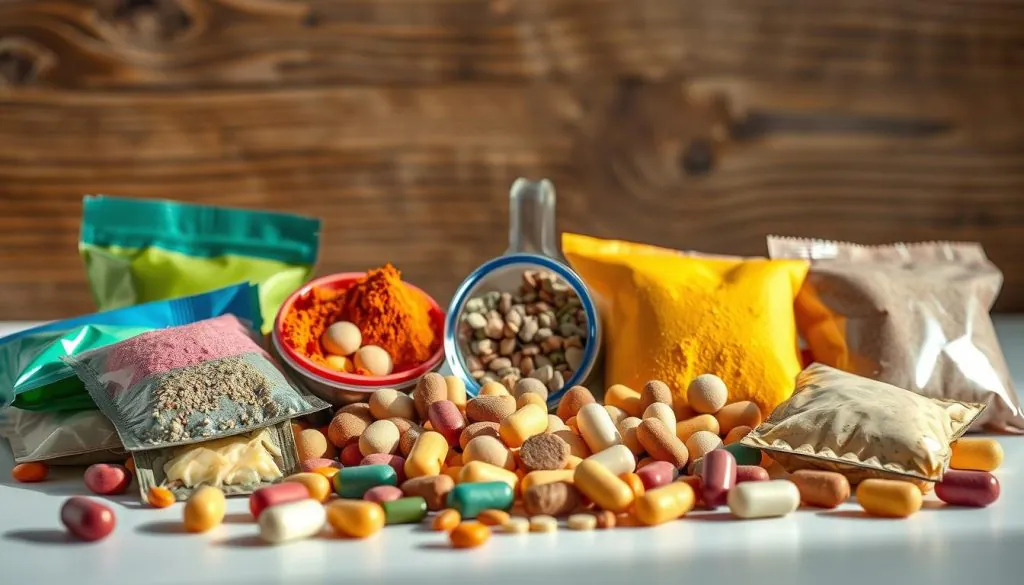
Powders often provide the best balance of stability and precise dosing. They stay drier than soft chews and resist heat and humidity better, which helps protect potency across the shelf life.
Powder mixes also let you fine-tune portions if your dog is small or sensitive. For easy daily use, consider DLY Pets probiotics for dogs in powder form. Mixing into a little wet food makes administration simple.
Most dogs accept powdered mixes when blended into a tasty spoonful of food. If your pet is picky, try a capsule tucked into a soft treat or hide it in a bit of chicken.
“Powders suit home routines; capsules and chews are handy for travel and boarding.”
Tip: Choose a delivery method that matches your routine and environment, and pick brands with clear strain IDs and stability claims to protect results.
A good formula eases transitions and builds resilience. Below are top picks and practical notes to help you choose a reliable option for young dogs.
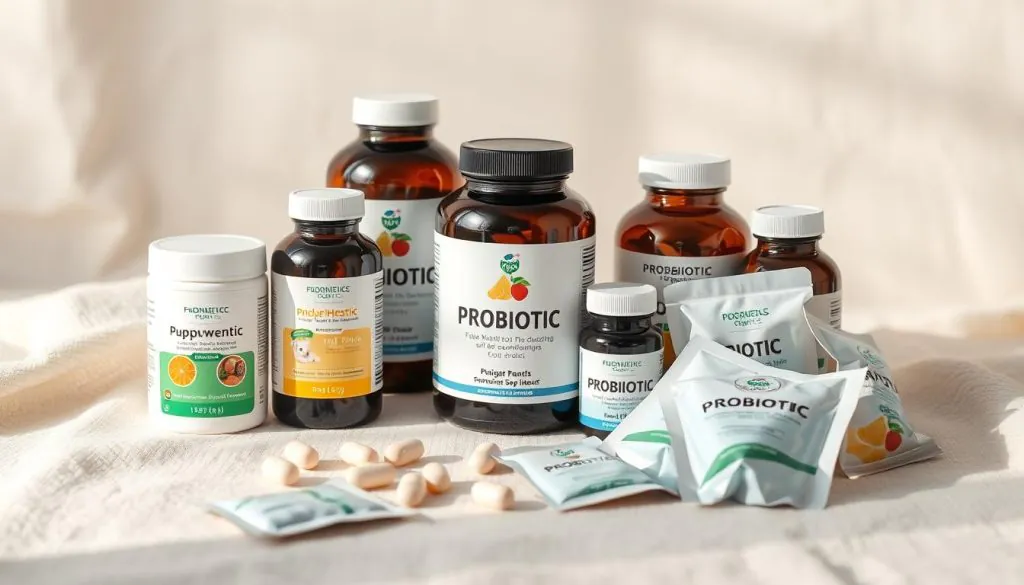
DLY Pets offers a puppy-forward blend with gentle CFUs, known strains like L. acidophilus and B. animalis (AHC7), plus prebiotic fiber to feed good bacteria. It targets loose stool and aids recovery during diet changes.
Consult your vet if diarrhea lasts over 48 hours; use supplements alongside professional care.
Adult dogs benefit from steady microbial support that keeps digestion and skin health stable. Pick a daily mix that matches your dog’s lifestyle and steps up during stress, travel, or antibiotic recovery.

Look for blends with Enterococcus faecium SF68 and L. plantarum. These strains help steady digestion and offer immune support when given daily at maintenance doses.
Saccharomyces boulardii works well during diarrhea flare-ups and diet shifts. BL999 may ease anxiety-linked behaviors that often worsen tummy upset.
“A steady daily routine often prevents small issues from becoming clinic visits.”
Use maintenance dosing every day and increase within the 1–10 billion CFU range during upset. Watch infections or recurring problems and consult your vet if symptoms persist.
Think of prebiotics as fuel and postbiotics as backup — both boost daily digestive resilience.
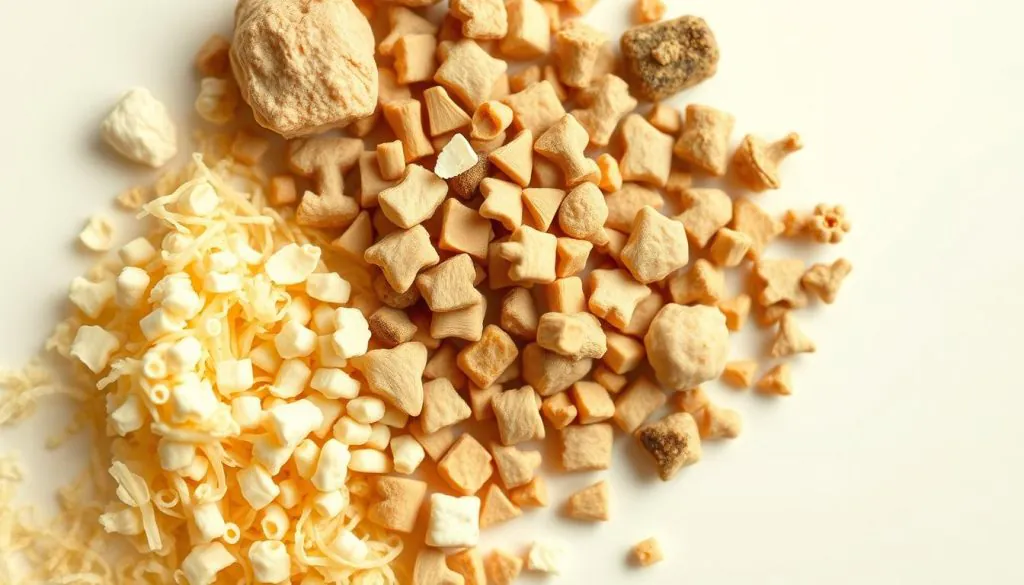
Prebiotics are fibers that feed beneficial bacteria in the gut. They help live strains colonize and perform more consistently each day.
Postbiotics are inactivated cells and metabolic byproducts. They can aid the digestive tract and immune responses even when live counts dip during shipping or storage.
“Feeding gut bacteria what they need is the simplest route to a healthier, more resilient digestive system.”
| Element | Role | Practical note |
|---|---|---|
| Prebiotics | Fuel for good microorganisms | Helps probiotics colonize; found in fiber blends |
| Postbiotics | Metabolic support and immune signals | Helpful when live counts vary; adds resilience |
| Powder form | Stability and easy dosing | Resists heat/humidity; mixes into meals |
| Synbiotic approach | Combined benefit | DLY Pets probiotics for dogs include prebiotics to enhance daily results |
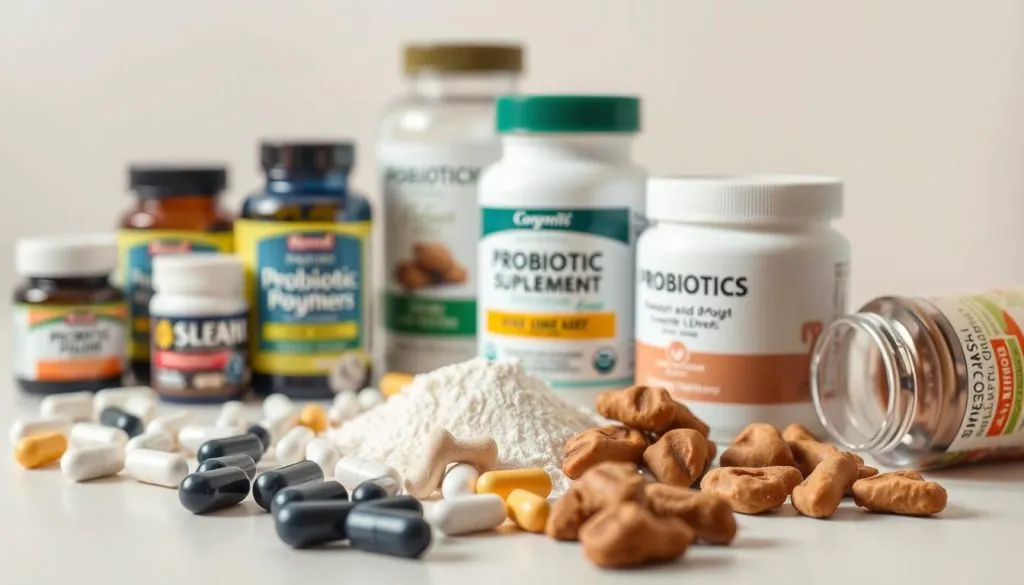
Start with a clear plan so you can watch how your dog responds. Begin at a low daily CFU serving and increase slowly over 7–10 days. That helps you find a comfortable unit that limits upset.
Typical safe range: 1–10 billion cfus per day. Use lower amounts for maintenance and higher amounts briefly during active diarrhea or after antibiotics.
Track stool, appetite, and energy. Steady improvement usually means the dose is right.
Watch for gas, bloating, loose stool, or itching. If problems persist, reduce dose or pause and contact veterinary medicine.
Severely immunocompromised pets should only use these supplements under vet supervision due to rare infection risk.
Start several days before travel or a major food change. Powders mix into food easily; capsules hide in treats.
| Action | When | What to watch |
|---|---|---|
| Start low | Day 1–3 | stool consistency, appetite |
| Ramp slowly | Day 4–10 | energy, minor gas |
| Increase briefly | Active diarrhea | improvement in 48–72 hours |
| Call vet | Persistent symptoms | fever, blood, severe lethargy |
“Treat these products as supplements, not replacement disease treatment.”
Tip: Begin with DLY Pets probiotics for dogs at a low dose and ramp to tolerance. Keep notes on brand, dose, and response to share during checkups and study-aligned adjustments with your veterinarian.
A clear plan—right strain, sensible CFUs, and steady dosing—lets you protect your dog’s digestion and immune system.
Daily use of targeted probiotics at the recommended 1–10 billion CFUs per day can boost gut balance, curb diarrhea, and help the body fight infections. Check labels for exact strain names, CFU counts at expiry, and U.S. quality marks before you buy.
Choose a product that includes prebiotic support to build a healthy gut foundation and use higher CFUs short term during flare-ups while you consult your veterinarian.
Consider DLY Pets reviews when comparing options; then start low, monitor stool and energy, and partner with your vet for tailored canine health care.
